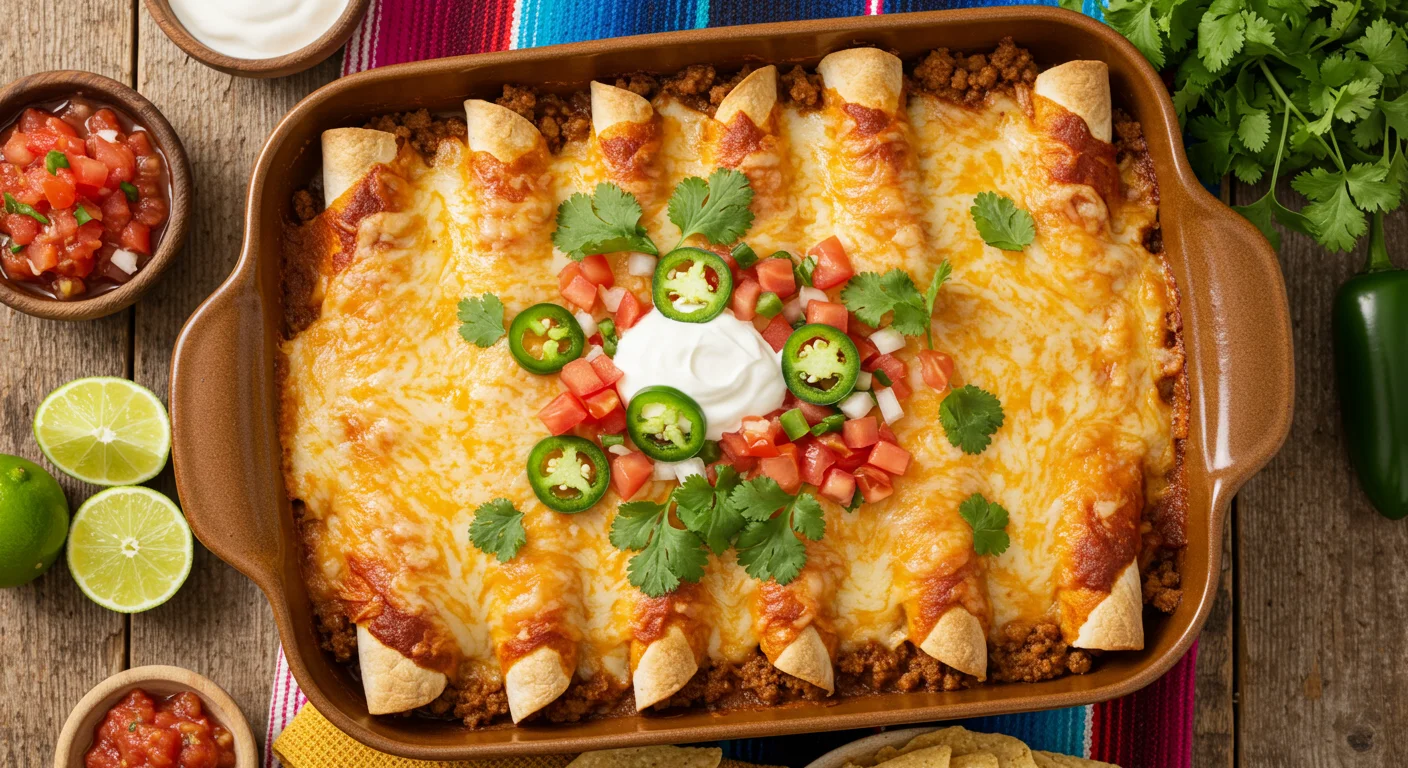
Cheesy Ground Beef Enchiladas: The Ultimate Comfort Food Guide
Cheesy ground beef enchiladas bring together simple ingredients to create a warm, filling, and satisfying meal. They combine seasoned beef, soft tortillas, rich enchilada sauce, and plenty of melted cheese for a dish that feels both comforting and easy to make.
This classic recipe doesn’t require complicated steps or hard-to-find items. That makes it a reliable choice for weeknight dinners.
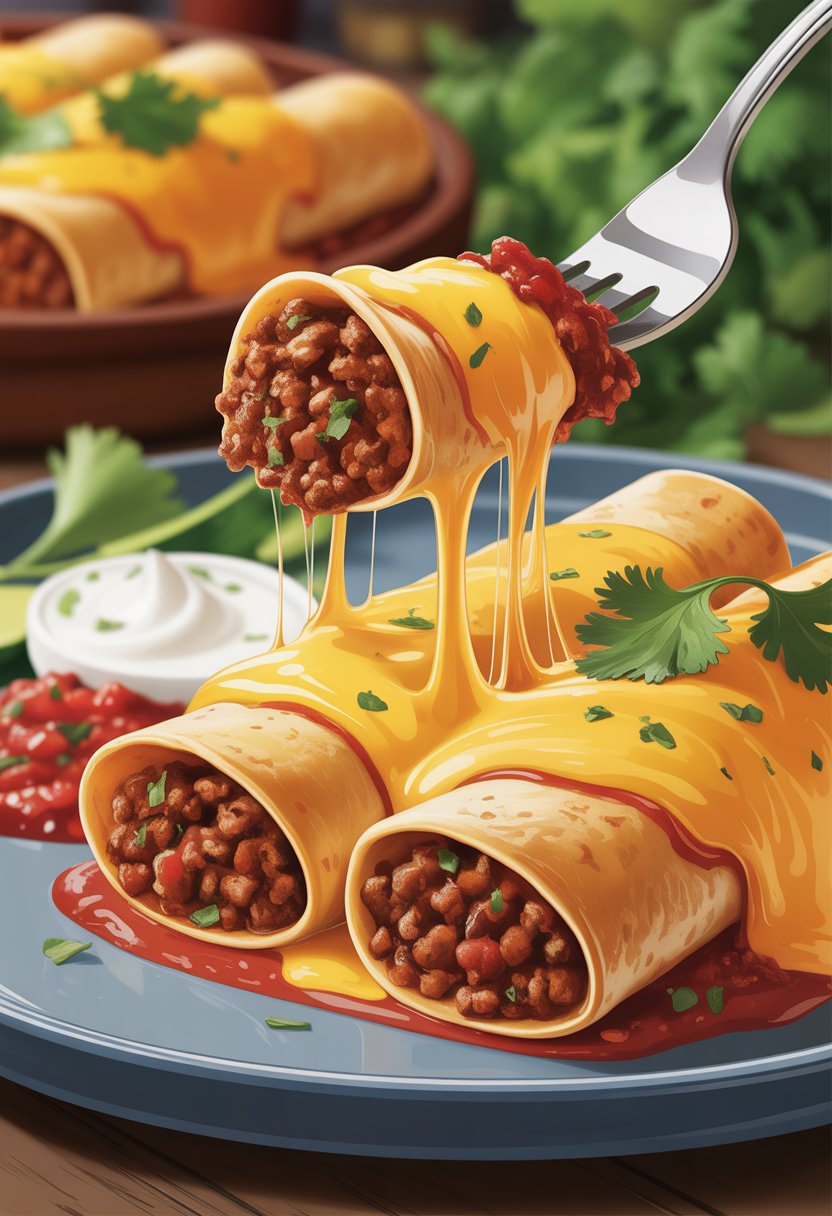
What makes them stand out is their balance of flavor and texture. The beef adds heartiness, the sauce provides tang and spice, and the cheese ties everything together with a creamy finish.
When baked, the tortillas soak up the sauce while staying soft. This creates a dish that feels homemade and satisfying without being overly complex.
These enchiladas also adapt well to different needs. They can be kept simple for quick preparation or adjusted with toppings, sides, or substitutions for variety.
This flexibility makes them a dish that can fit into many kitchens and meal plans.
What Makes Cheesy Ground Beef Enchiladas Special
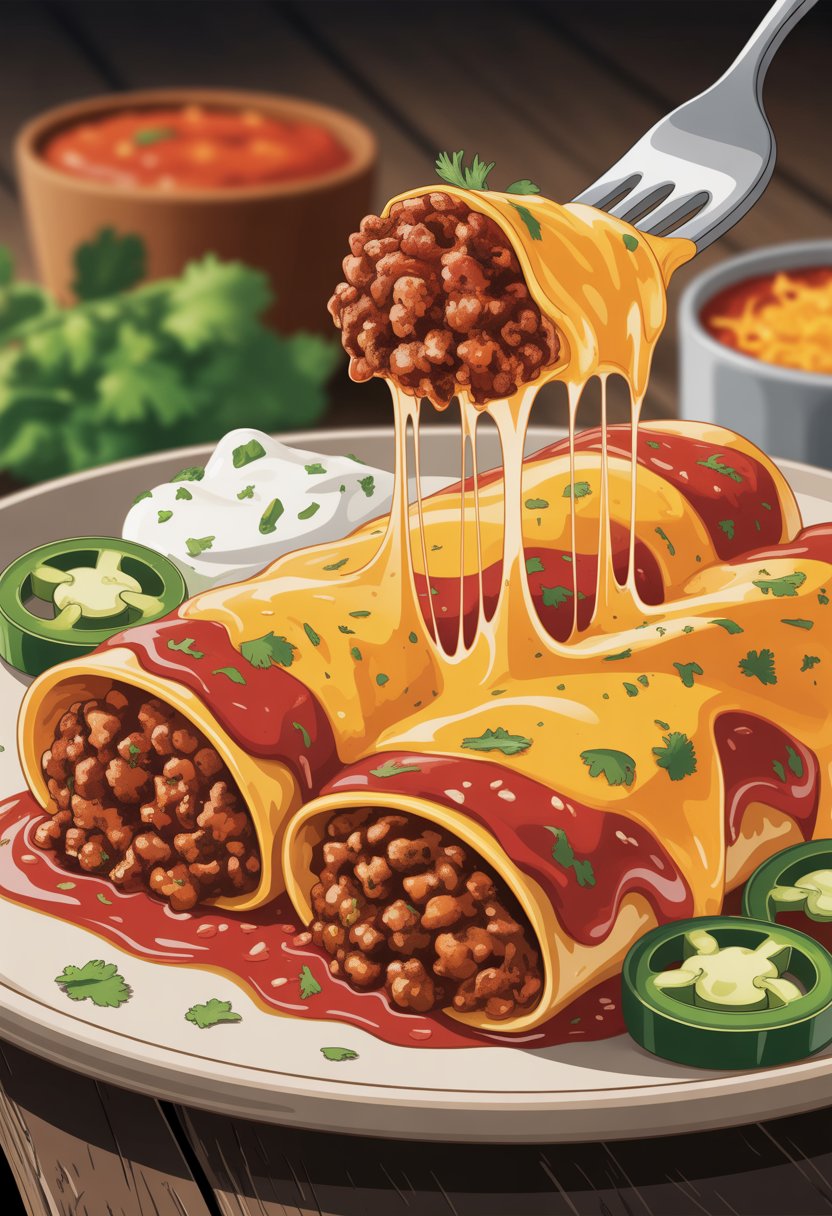
Cheesy ground beef enchiladas stand out because they combine simple ingredients into a dish that is hearty, flavorful, and easy to prepare. Their appeal comes from both the comforting textures of melted cheese and tortillas and the bold seasonings that give the beef filling its depth.
Classic Comfort Food Appeal
These enchiladas represent comfort food in its most recognizable form. Warm tortillas filled with seasoned beef and topped with melted cheese create a meal that feels familiar and satisfying.
Families often choose beef enchiladas for weeknight dinners because they are filling and easy to portion. The dish also adapts well to gatherings, where a pan of enchiladas can be served family-style and paired with rice, beans, or a simple salad.
The combination of soft tortillas, rich sauce, and gooey cheese makes them approachable for both children and adults. Unlike more complex recipes, they use accessible ingredients found in most grocery stores.
Key Flavor Components
The flavor of cheesy ground beef enchiladas comes from the balance of seasoned meat, sauce, and cheese. Ground beef provides a savory base, while onion and garlic add depth.
Seasonings like cumin, salt, and black pepper enhance the richness without overwhelming the dish. Enchilada sauce is essential because it coats the tortillas and ties the filling together.
A tomato and chili base gives the dish a mild heat and tang. Adding green chilies or olives can introduce extra layers of flavor.
Cheese plays a central role in both texture and taste. Monterey Jack or cheddar melts smoothly, creating the creamy quality people expect.
Fresh toppings such as cilantro, avocado, or sour cream cut through the richness. They add freshness to each serving.
Beef Enchiladas vs. Other Enchiladas
Beef enchiladas differ from chicken, cheese, or vegetarian versions mainly in heartiness. Ground beef creates a more filling dish with a stronger savory profile compared to lighter proteins.
Chicken enchiladas often highlight mild spices and a lighter texture. Vegetarian versions rely on beans, vegetables, or cheese for substance.
The sauce choice also shifts the character of each type. Red enchilada sauce pairs well with beef, while green sauce often complements chicken or vegetable fillings.
This makes beef enchiladas distinct in both flavor and presentation. They are especially appealing when baked with a generous layer of cheese.
Essential Ingredients for Cheesy Ground Beef Enchiladas
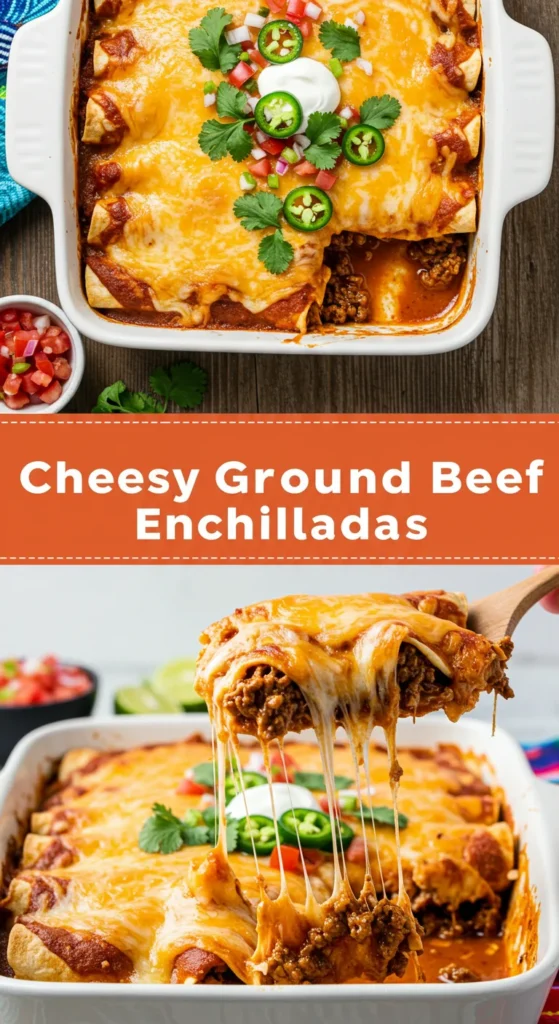
A good enchilada balances seasoned meat, melted cheese, soft tortillas, and a flavorful sauce. Each ingredient affects the taste, texture, and structure of the dish in a noticeable way.
Ground Beef and Seasonings
Ground beef is the base of the filling, providing both flavor and texture. Many cooks choose an 80/20 blend because the small amount of fat keeps the meat moist without making the dish greasy.
Leaner beef works as well, but it may need extra seasoning or a splash of oil during cooking. Seasonings build depth in the beef mixture.
Common choices include ground cumin, chili powder, and taco seasoning blends. Adding onion and garlic while browning the meat creates a strong flavor foundation.
Some prefer to stir in a small amount of enchilada sauce while the beef simmers. This step ties the filling to the sauce that will cover the tortillas, giving a more consistent taste throughout the dish.
A pinch of salt and pepper at the end balances the spices.
Choosing the Right Cheese
Cheese adds richness and helps bind the filling. Shredded cheddar is a popular choice for its sharp flavor, while Monterey Jack cheese melts smoothly and adds a mild creaminess.
Many cooks use a blend of the two for both taste and texture. A Mexican cheese blend, often sold pre-shredded, is another option.
It usually combines cheddar, Monterey Jack, and sometimes queso quesadilla or asadero. This mix creates a stretchy, melty topping that browns evenly in the oven.
Cheese can go both inside the enchiladas and on top. A small sprinkle inside the tortilla makes the filling creamy, while a heavier layer on top creates the golden crust.
Using too much inside can make rolling harder, so balance is important.
Tortilla Types and Their Impact
The tortilla determines how the enchilada holds together. Flour tortillas are soft, flexible, and easy to roll, which makes them a convenient choice for beginners.
They also absorb sauce well but can become slightly doughy if over-sauced. Corn tortillas are more traditional and add a distinct flavor.
They are firmer and may crack if not warmed first. Heating them in a skillet or microwave makes them pliable enough to roll without breaking.
Size also matters. A 6-inch tortilla works well for individual portions, while larger tortillas can be used for heartier servings.
Choosing between flour and corn often comes down to texture preference and dietary needs.
The Role of Enchilada Sauce
Enchilada sauce ties the dish together by coating the tortillas and adding moisture. Red enchilada sauce is the most common, made with chili powder, tomato, and broth.
It delivers a mild heat and a tangy finish that complements seasoned beef. Some cooks prefer green sauce, but red pairs especially well with ground beef and cheddar.
Store-bought versions are convenient, though homemade sauce allows more control over spice and salt levels. The sauce should cover both the bottom of the baking dish and the top of the enchiladas.
A thin layer underneath prevents sticking, while a generous topping ensures the tortillas stay soft during baking. Consistent coverage also helps the cheese melt smoothly across the surface.
Step-by-Step Guide: How to Make Cheesy Ground Beef Enchiladas
Making baked enchiladas involves preparing a seasoned beef filling, softening tortillas so they roll without breaking, layering with sauce and cheese, and baking until everything is hot and bubbly. Each step builds flavor and texture, ensuring the ground beef enchiladas come out hearty and satisfying.
Preparing the Beef Filling
The filling starts with browning ground beef in a skillet over medium heat. Cooking until no pink remains ensures the meat is safe to eat and develops a rich flavor.
Draining excess fat prevents the enchiladas from becoming greasy. Onions and garlic add depth to the beef mixture.
They should be sautéed with the meat until softened and aromatic. Common seasonings include chili powder, cumin, salt, and black pepper.
These spices create the savory base that defines classic enchiladas. For added variation, some cooks include diced green chilies, black beans, or corn.
These ingredients stretch the filling and add texture. The key is keeping the mixture balanced so it holds together inside the tortillas without being too dry or too wet.
Warming and Rolling the Tortillas
Corn tortillas are traditional, but flour tortillas can be used for a softer bite. Corn tortillas often crack if not warmed first, so heating them is important.
A microwave wrapped in a damp towel or a quick pass on a hot skillet makes them pliable. Each tortilla should be filled with a few spoonfuls of the beef mixture.
Adding a small amount of shredded cheese inside helps bind the filling. It is best not to overfill, as this can cause the enchiladas to tear or unroll during baking.
Rolling should be tight but gentle. Place the seam side down in the baking dish to keep them closed.
Consistent rolling ensures even layers and a neat presentation once the enchiladas are baked.
Assembling and Layering
A greased baking dish prevents sticking and makes cleanup easier. A thin layer of enchilada sauce on the bottom creates a base that keeps tortillas from drying out.
Once the rolled tortillas are placed in the dish, pour sauce evenly over the top. Spreading the sauce with a spoon ensures full coverage.
Cheese is the final layer before baking. A mix of cheddar and Monterey Jack melts smoothly and adds flavor.
Covering the tortillas evenly with cheese guarantees a golden, bubbly finish.
Baking for Gooey Perfection
The dish should be baked in a preheated oven at 350°F (175°C). Baking for about 20–25 minutes allows the sauce to soak into the tortillas and the cheese to melt thoroughly.
The enchiladas are ready when the cheese is bubbling and lightly golden. Letting them rest for 5 minutes after baking makes them easier to serve, as the filling sets slightly.
At this point, garnishes like chopped cilantro, sliced green onions, or sour cream can be added. These small touches enhance the finished baked enchiladas without overwhelming the main flavors.
Toppings, Garnishes, and Side Dishes
Cheesy ground beef enchiladas taste even better when paired with the right extras. Creamy toppings, fresh garnishes, and balanced side dishes add flavor, texture, and variety to the meal.
Classic Toppings for Enchiladas
Traditional toppings bring richness and contrast to the savory filling. Sour cream is one of the most common choices, adding a cool and creamy balance to the seasoned beef and cheese.
A spoonful on each enchilada also helps mellow spicier sauces. Shredded cheese often goes on top before baking, but a sprinkle of extra cheddar or Monterey Jack after baking creates more melt and flavor.
Some people also add crumbled queso fresco for a lighter, salty finish. For those who enjoy spice, sliced jalapeños or a drizzle of hot sauce can boost heat without overwhelming the dish.
These toppings allow each person to adjust flavor to their preference.
A simple table can help organize common topping options:
| Topping | Flavor Profile | Best Use |
|---|---|---|
| Sour Cream | Cool, creamy | Balances heat and richness |
| Extra Cheese | Savory, melty | Added after baking |
| Jalapeños | Spicy, crisp | Fresh or pickled garnish |
| Hot Sauce | Tangy, spicy | Drizzle before serving |
Fresh Garnishes to Brighten the Plate
Fresh garnishes add color and brightness to heavy enchiladas. Cilantro is the most common herb, offering a sharp, citrus-like flavor that cuts through the richness.
A small sprinkle goes a long way. Avocado slices or a scoop of guacamole provide creaminess with a mild taste.
They also add healthy fats that pair well with the spiced beef. For extra freshness, many cooks use pico de gallo, a mix of diced tomatoes, onions, cilantro, and lime juice.
The acidity balances the cheese and sauce. Green onions also work well, giving a mild crunch and light onion flavor without overpowering the dish.
These garnishes not only improve taste but also make the plate look more inviting and colorful.
Perfect Sides for a Complete Meal
Side dishes round out the meal and provide balance. Mexican rice is a classic choice, offering a mild tomato and garlic flavor that complements the enchiladas without competing with them.
Refried beans or black beans add protein and fiber, making the meal more filling. They can be served smooth or left chunky for texture.
Some people top beans with a little cheese or hot sauce for extra flavor.
A crisp green salad with lettuce, cucumber, and lime dressing helps lighten the plate. The freshness of raw vegetables cuts through the richness of the enchiladas and makes the meal feel more balanced.
Creative Variations and Substitutions
Cheesy ground beef enchiladas can be adapted in many ways to suit different tastes and dietary needs. By changing the protein, cheese, sauce, or vegetables, the dish becomes flexible while still keeping its familiar comfort.
Alternative Proteins and Fillings
Ground beef is traditional, but other proteins work well and can change the flavor and nutrition. Ground turkey is a leaner option that keeps the same texture but reduces fat.
Shredded chicken or pork can also be used, especially if leftover meat is available.
For a vegetarian version, beans make a hearty filling. Black beans, refried beans, or even lentils provide protein and fiber.
Mixing beans with rice creates a balanced and filling option that holds together nicely inside tortillas.
Cooked grains like quinoa or brown rice can stretch the filling further. These additions give the enchiladas more bulk and help them feed larger groups without losing flavor.
Cheese and Sauce Swaps
Cheese is central to enchiladas, but the type of cheese can change the taste and texture. Cheddar and Monterey Jack melt smoothly, but mozzarella, pepper jack, or Oaxaca cheese are good alternatives.
A blend of cheeses often provides the best balance of flavor and melt.
Sauce choice also makes a big difference. Red enchilada sauce is common, but green tomatillo sauce adds brightness and a slightly tangy flavor.
For a creamier option, a mild white sauce or sour cream sauce can replace the tomato-based versions.
Those who enjoy spicier food can stir hot sauce, chipotle peppers, or diced jalapeños into the sauce before baking. This simple change increases heat without affecting the overall structure of the dish.
Adding More Vegetables
Vegetables add flavor, texture, and nutrition to enchiladas. Bell peppers are one of the easiest additions since they soften while cooking and blend well with the beef.
Onions, zucchini, or mushrooms also mix easily into the filling without overpowering it.
Corn and spinach are other popular choices. Corn adds sweetness, while spinach cooks down and blends into the beef mixture.
A simple approach is to sauté vegetables before adding them to the beef or bean filling. This step removes excess moisture and ensures the enchiladas do not become soggy.
Tips for Storing and Reheating Leftover Enchiladas
Leftover enchiladas can taste just as good the next day if stored correctly, reheated with care, and even repurposed into new meals. Preventing soggy tortillas, keeping fillings moist, and using the right method for reheating makes all the difference.
Proper Storage Methods
Enchiladas should not sit out at room temperature for more than 2 hours. After cooling slightly, they need to be placed in the refrigerator or freezer.
This helps prevent bacteria growth and keeps the tortillas from breaking down.
For short-term storage, an airtight container works best. Wrapping them tightly in foil or plastic wrap also helps stop odors from other foods from seeping in.
Stored this way, enchiladas last up to 3 days in the fridge.
For longer storage, freezing is the better option. Place enchiladas in a freezer-safe container or bag, removing as much air as possible.
Dividing them into single portions makes reheating easier later. Frozen enchiladas typically keep their quality for about 3 months.
Best Ways to Reheat
The oven is the most reliable way to reheat enchiladas without losing texture. Preheating to 350°F (175°C) and covering the dish loosely with foil helps retain moisture while keeping tortillas from drying out.
Baking for 20–25 minutes usually heats them through evenly.
For smaller portions, a toaster oven or air fryer works well. The air fryer, set at 350°F for about 3–4 minutes, gives a crisp tortilla while keeping the inside warm.
A stovetop skillet can also be used. Lightly heating with oil crisps the bottom, then adding a splash of water and covering allows steam to finish the job.
While quick, the microwave often makes tortillas soft or rubbery, though covering with a damp paper towel can reduce dryness.
How to Repurpose Leftovers
If reheated enchiladas lose some texture, they can be turned into new meals. Chopping them into bite-sized pieces makes them easy to add to a breakfast scramble with eggs and vegetables.
They also work well layered into a quick enchilada casserole. Simply add extra sauce, cheese, and bake until bubbly.
Another option is to mix cut-up enchiladas into a pot of soup or chili. The tortillas thicken the broth while the meat and cheese add flavor.
These methods prevent waste and give leftovers a fresh purpose.
Frequently Asked Questions
Cheesy ground beef enchiladas can be prepared in many ways, from using different cheeses to adjusting sauces and fillings. Small changes in ingredients or cooking methods can create new flavors while keeping the dish simple and satisfying.
What are the essential ingredients for making simple cheesy ground beef enchiladas?
Ground beef, tortillas, shredded cheese, and enchilada sauce form the base of the dish. Onions, garlic, and spices such as chili powder and cumin add flavor.
Optional ingredients like beans or corn can be included for extra texture and nutrition.
How can I incorporate cream cheese into ground beef enchiladas for a creamier texture?
Mix softened cream cheese directly into the cooked beef filling. This creates a smooth, rich texture that balances the spices.
Some cooks also blend cream cheese with shredded cheese before rolling the tortillas for an extra creamy layer.
What is the process for creating a cheesy beef enchilada casserole?
Instead of rolling tortillas, layer them flat with beef, cheese, and sauce in a baking dish. Repeat layers until the dish is full, then top with sauce and cheese.
Bake until the cheese is melted and bubbly, similar to a lasagna-style preparation.
Can you provide tips for making authentic Mexican ground beef enchiladas?
Use corn tortillas instead of flour for a more traditional base. Lightly fry the tortillas in oil before filling to prevent tearing.
A homemade enchilada sauce made with dried chilies or fresh peppers gives a more authentic flavor compared to canned sauces.
How do I make cheesy beef enchiladas without using red sauce?
Replace red enchilada sauce with alternatives such as green tomatillo sauce, salsa verde, or a creamy cheese sauce. Another option is to use a mild tomato-based sauce with added spices.
These swaps change the flavor profile while keeping the dish cheesy and hearty.
What variations can I try for a unique twist on traditional ground beef enchiladas?
Swap ground beef with shredded chicken, turkey, or even roasted vegetables.
Add toppings like avocado, jalapeños, or queso fresco for extra flavor.
Mixing different cheeses such as Monterey Jack, cheddar, or queso blanco can also change the texture and taste.