Stuffed Bell Peppers with Beef & Rice: The Complete Guide
Stuffed bell peppers with beef and rice bring together simple ingredients in a way that feels both hearty and practical. This dish combines tender peppers, seasoned ground beef, and fluffy rice, all baked until the flavors blend into a balanced and satisfying meal.
Stuffed bell peppers with beef and rice offer a complete comfort food that is easy to prepare, customizable, and suitable for both weeknight dinners and meal prep.
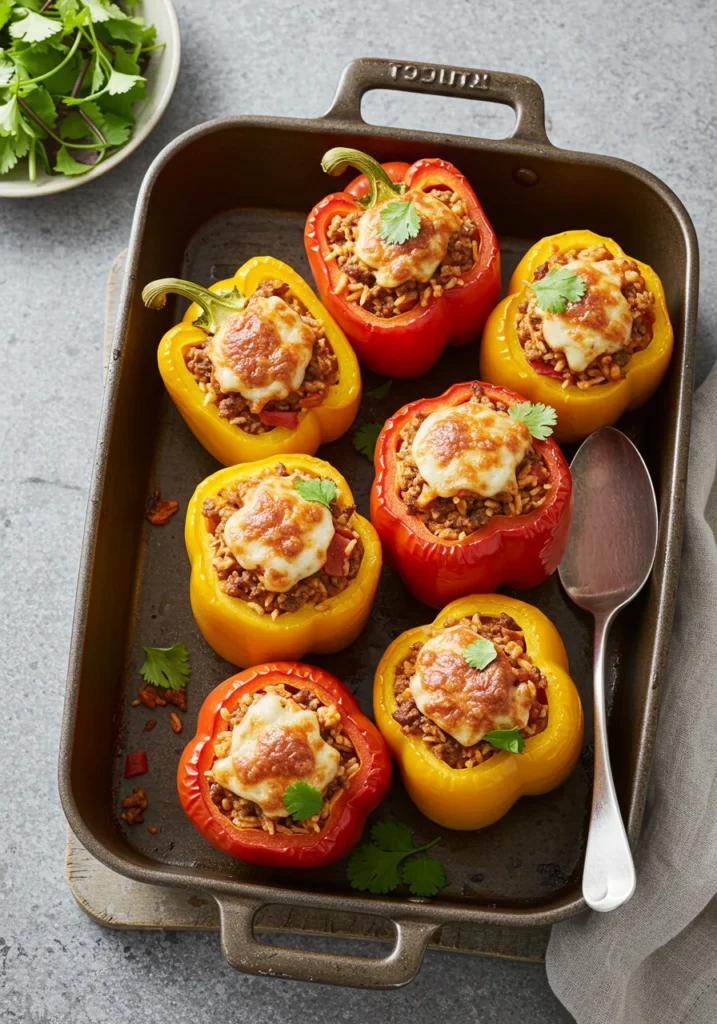
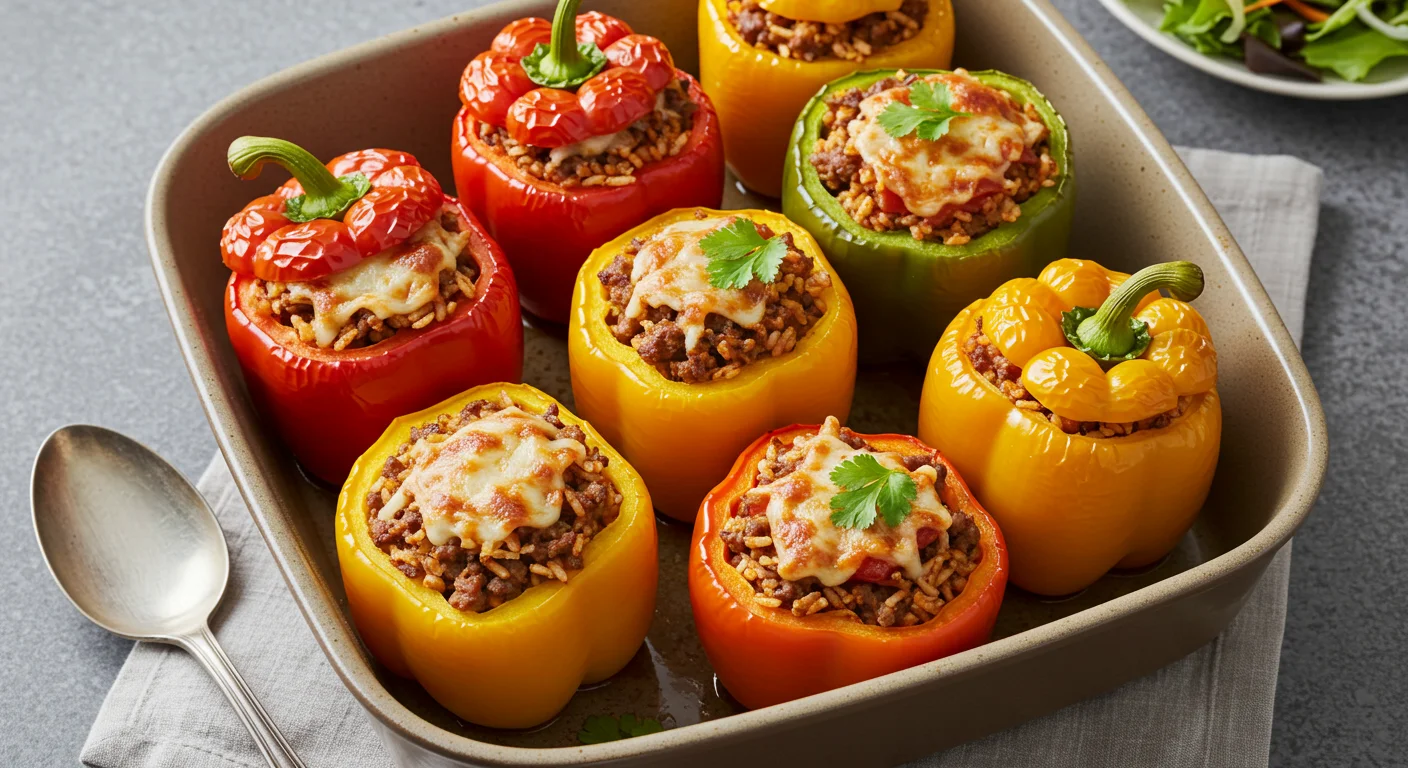
Many home cooks enjoy this recipe because it uses common pantry staples yet delivers a dish that looks and tastes special. The peppers serve as both the vessel and part of the meal, while the filling can be adjusted with different cheeses, herbs, or vegetables.
This makes it flexible enough to fit different tastes without losing the classic appeal.
Essential Ingredients for Stuffed Bell Peppers with Beef & Rice
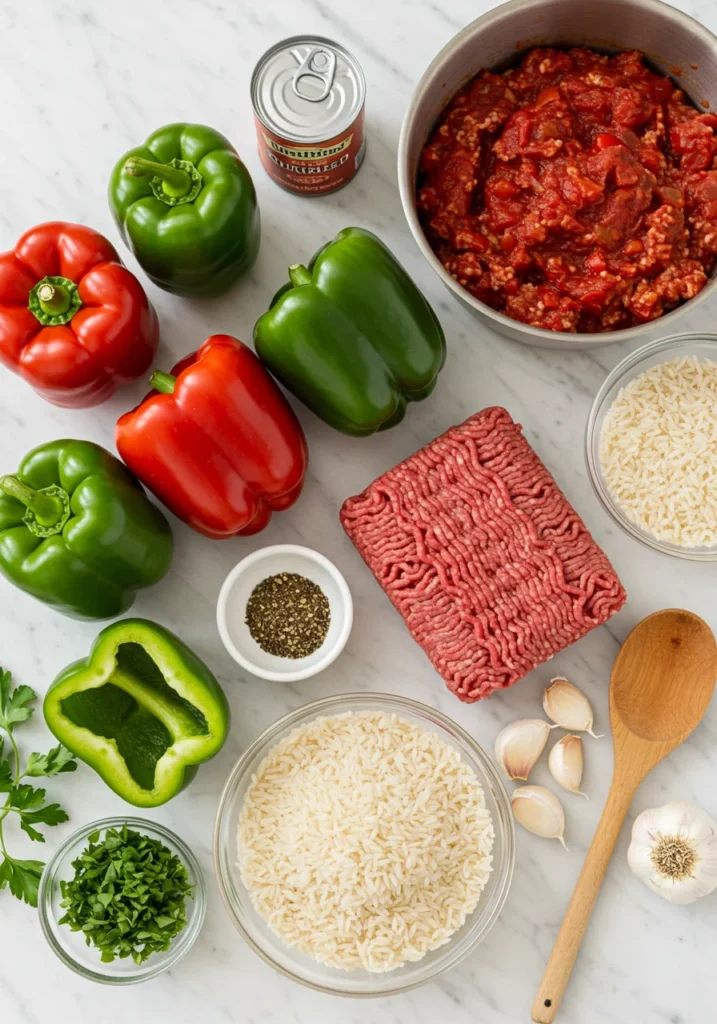
The flavor and texture of stuffed bell peppers depend on the quality of the peppers, the type of protein, the choice of rice, and the seasonings used. Each ingredient plays a role in balancing taste, nutrition, and overall satisfaction.
Choosing the Best Bell Peppers
Fresh, firm bell peppers hold their shape during baking and provide a natural sweetness that balances the savory filling. Green peppers are the most common choice because of their sturdy walls and mild bitterness.
Red, yellow, and orange peppers offer a sweeter flavor and can add color variety to the dish. When selecting peppers, look for ones that feel heavy for their size with smooth, glossy skin.
Avoid peppers with wrinkles, soft spots, or dull coloring. The shape matters too—flat-bottomed peppers stand upright more easily in a baking dish, preventing spills during cooking.
Bell peppers also vary slightly in size. Medium to large peppers work best since they provide enough room for the beef and rice mixture without becoming too bulky.
A mix of colors can make the dish more visually appealing while also offering subtle flavor differences.
Selecting Ground Beef and Substitutes
Ground beef is the traditional protein in stuffed peppers. For best results, a medium-fat blend such as 80/20 provides moisture and flavor without leaving the filling greasy.
Leaner beef can be used but may need added olive oil or tomato paste to prevent dryness. Substitutes are easy to incorporate.
Ground turkey and ground chicken create a lighter version with less fat. These options benefit from extra seasoning, such as garlic, onion, or smoked paprika, to build flavor.
Ground sausage can also be mixed with beef to add richness and depth. Plant-based alternatives like lentils or crumbled tofu can replace meat for vegetarian versions.
When using these, diced tomatoes and olive oil help keep the filling moist. The key is to balance protein with the rice and vegetables so the filling remains hearty.
Types of Rice and Alternatives
White rice remains the standard choice because it cooks evenly and absorbs tomato sauce well. Long-grain white rice keeps its shape and prevents clumping inside the peppers.
Brown rice offers a nuttier flavor and more fiber but takes longer to cook, so it should be prepared fully before use. Other grains and substitutes provide flexibility.
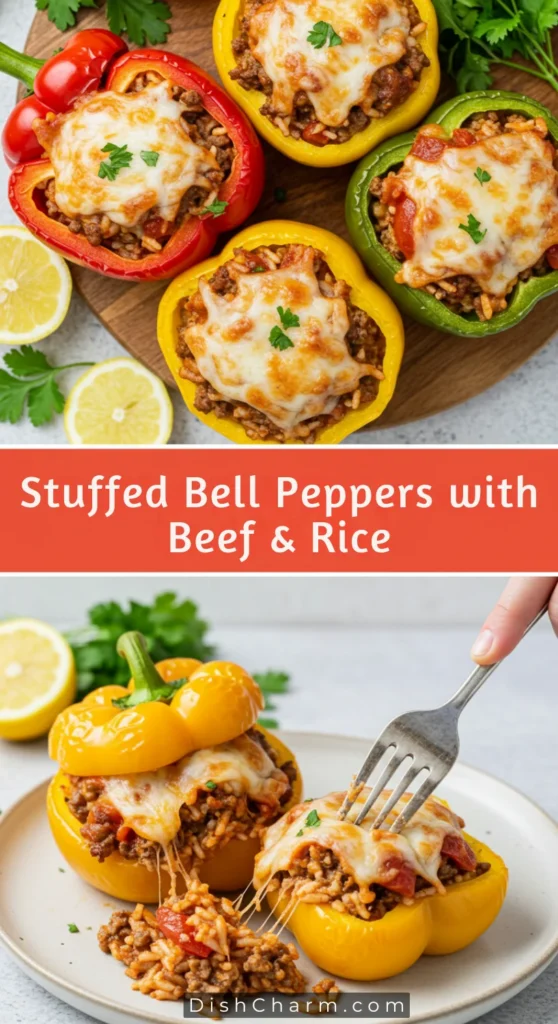
Quinoa adds protein and a slightly earthy taste, making it a good option for a lighter dish. Cauliflower rice works for low-carb diets, though it releases more moisture and may require less sauce.
The type of rice or substitute affects both texture and flavor. For a classic version, white or brown rice works best.
For variation, quinoa or cauliflower rice can be used, but adjusting liquid and seasoning is important to maintain balance.
Key Seasonings and Add-Ins
Seasonings define the flavor of stuffed peppers. Garlic, whether fresh cloves or powder, pairs well with yellow onion for a strong aromatic base.
Tomato sauce or tomato paste adds body, while diced tomatoes can provide texture and acidity. Herbs are equally important.
Italian seasoning blends oregano, basil, and thyme for a familiar profile. Fresh parsley brightens the filling, while dried oregano or smoked paprika deepens flavor.
A pinch of red pepper flakes can add gentle heat. Cheese is optional but widely enjoyed.
Shredded cheese such as Monterey Jack or mozzarella melts into the filling or creates a topping that balances the acidity of tomatoes. Kosher salt and black pepper should be added gradually, tasting as the filling is mixed to avoid over-seasoning.
Step-by-Step Preparation and Cooking Methods
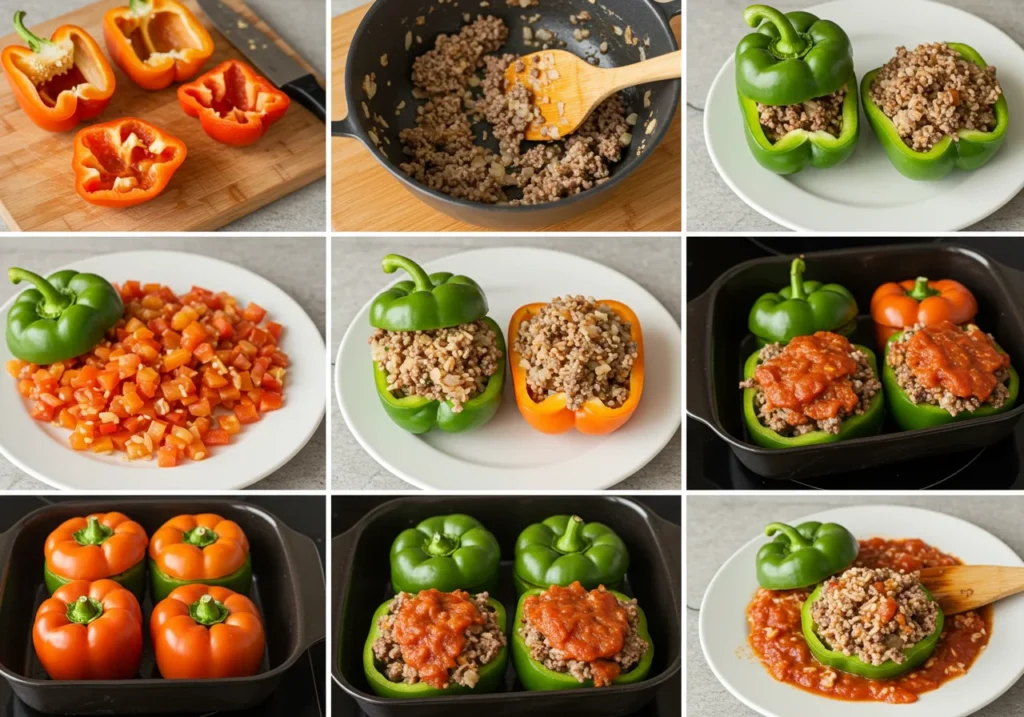
Stuffed bell peppers with beef and rice come together by preparing the peppers, cooking a flavorful filling, and baking everything until tender. Each stage requires attention to detail so the peppers hold their shape, the filling stays balanced, and the final dish develops the right texture and flavor.
Preparing Bell Peppers for Stuffing
The peppers should be large enough to hold a hearty filling but not so big that they take too long to soften. Bell peppers with flat bottoms stand upright more easily, which helps during baking.
Start by cutting off the tops and removing the seeds and membranes inside. Rinse the peppers under cold water to clear out any loose pieces.
If a pepper leans or tips over, slice a very thin layer from the bottom to create a stable base. Avoid cutting too much, as holes can cause the filling to leak.
Lightly brush the inside and outside of each pepper with olive oil. A small amount of salt and pepper adds flavor and helps the peppers roast evenly in the oven.
Making the Beef and Rice Filling
The filling combines ground beef, long grain white rice, vegetables, and seasonings for a balanced texture. Cook the rice ahead of time so it is ready to mix in.
In a skillet over medium heat, brown the ground beef until no pink remains. Drain excess fat if needed.
Add diced yellow onion and cook until softened, then stir in minced garlic for a minute until fragrant. Mix in diced tomatoes, tomato paste or sauce, and seasonings such as Italian herbs, paprika, salt, and black pepper.
Stir well to create a moist but not watery mixture. Add the cooked rice and half of the shredded cheese.
The cheese helps bind the filling together while adding richness. Remove from heat once everything is evenly combined.
Assembling and Baking the Peppers
Place the prepared peppers upright in a baking dish. Spoon the beef and rice mixture into each one, pressing gently to fill them completely without overpacking.
Pour seasoned tomato sauce into the dish around the peppers. This keeps the bottoms moist while baking without making the tops soggy.
Sprinkle the remaining cheese on top of each pepper. Cover the dish with foil and bake at 375°F for about 35–40 minutes.
Remove the foil and continue baking for 10–15 minutes until the peppers are tender and the cheese is golden. Let the peppers rest for 5 minutes before serving.
Garnish with fresh parsley for color and added freshness.
Flavor Variations and Customization Ideas
Stuffed peppers adapt easily to different tastes and diets. Small changes in protein, grains, seasoning, or toppings can shift the dish from hearty comfort food to something lighter, spicier, or more balanced.
Vegetarian and Lighter Options
For a leaner meal, many cooks replace ground beef with ground turkey or ground chicken. These proteins hold flavor well but reduce the overall fat content.
They also pair smoothly with tomato-based sauces and herbs. Vegetarian versions often use quinoa, cauliflower rice, or lentils for bulk.
Quinoa adds protein and a nutty taste, while cauliflower rice keeps the filling light without losing texture. Both options hold up well during baking.
Beans such as black beans or chickpeas can also replace meat. They bring fiber and protein while absorbing spices like cumin or smoked paprika.
A mix of beans and vegetables such as zucchini or spinach creates a filling that is both hearty and nutrient-rich.
Spice and Herb Enhancements
Seasonings shape the flavor of stuffed peppers more than any single ingredient. Italian seasoning blends often include dried oregano and basil, which add depth to tomato-based sauces.
These herbs balance the richness of meat and cheese without overpowering. For heat, cooks often turn to red pepper flakes.
A small pinch adds warmth, while a heavier sprinkle can make the dish noticeably spicy. Smoked paprika offers a different layer—mild heat with a subtle smokiness that pairs well with rice or beans.
Fresh herbs like parsley or cilantro can be stirred in just before filling the peppers. This keeps the flavors bright and prevents them from dulling in the oven.
A mix of dried spices for cooking and fresh herbs for finishing works best for balance.
Cheese and Topping Choices
Cheese changes both flavor and texture. Shredded cheese blends melt evenly, while Monterey Jack cheese provides a mild creaminess that pairs well with spiced fillings.
Mozzarella gives a stretchy texture, while cheddar adds sharper notes. Some cooks layer cheese inside the filling and on top.
This creates a creamy interior with a golden crust. Others prefer to keep cheese only on top for a lighter result.
Toppings can also include breadcrumbs for crunch or a drizzle of olive oil for richness. A sprinkle of fresh basil after baking adds color and freshness without extra heaviness.
Serving Suggestions and Meal Prep Tips
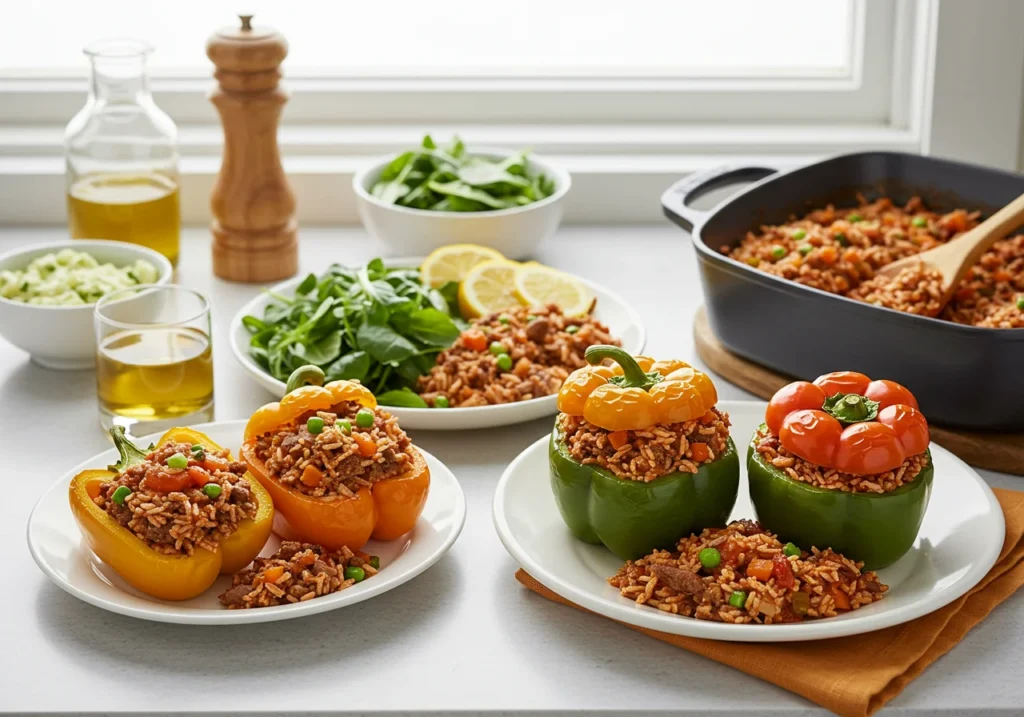
Stuffed bell peppers with beef and rice work well as both a family dinner and a practical meal prep option. They can be paired with simple sides for balance and stored ahead of time for busy days.
Pairing Stuffed Bell Peppers with Sides
These peppers already include protein, vegetables, and grains, so lighter sides help round out the meal. A crisp green salad with cucumbers, tomatoes, and a light vinaigrette adds freshness.
For a warm option, roasted vegetables such as zucchini, carrots, or broccoli complement the savory filling without overwhelming the dish. Steamed green beans or asparagus also work well.
Bread can be a good addition for those who want extra carbs. A slice of garlic bread or a small dinner roll pairs nicely with the tomato-based filling.
If serving to guests, add a simple topping bar with items like sour cream, chopped parsley, or shredded cheese so everyone can adjust flavors to their liking.
| Side Dish | Why It Works |
|---|---|
| Green salad | Adds freshness and crunch |
| Roasted veggies | Provides balance and extra fiber |
| Garlic bread | Complements tomato and beef flavors |
| Steamed beans | Light, quick, and nutrient-rich |
Make-Ahead and Freezer Instructions
Stuffed bell peppers are easy to prepare in advance, making them useful for meal prep. Cook the beef and rice filling, stuff the peppers, and refrigerate them for up to 24 hours before baking.
For longer storage, freezing works well. Assemble the peppers without cheese, place them in a freezer-safe dish, and cover tightly.
They can be frozen for up to 3 months. When ready to use, thaw the peppers in the refrigerator overnight.
Bake them covered at 350°F, adding about 5 extra minutes to the cooking time. Sprinkle cheese on top during the last few minutes of baking.
Leftovers reheat quickly in the microwave or oven. For best texture, the oven is preferred, as it prevents the peppers from becoming soggy.
Storage, Reheating, and Leftovers
Stuffed bell peppers with beef and rice keep well for several days if stored correctly, and they can also be frozen for longer storage. Safe handling and the right reheating method ensure that the peppers maintain good texture and flavor.
Best Practices for Refrigeration
Cooked stuffed bell peppers should cool to room temperature before storage. Placing them in the refrigerator while still warm can cause excess moisture, leading to soggy peppers.
Store them in an airtight container or wrap each pepper tightly with aluminum foil or plastic wrap. This helps preserve freshness and prevents odors from other foods from transferring.
Refrigerated stuffed bell peppers last 3 to 4 days. If the filling contains rice, it is best to eat them within 24 hours to reduce the risk of bacterial growth.
When reheating from the fridge, the oven at 350°F (175°C) works best. Cover peppers with foil to keep them moist, then heat for 15–20 minutes or until the center reaches 165°F (74°C).
For a quicker option, the microwave can be used, but the peppers may soften more than desired.
Freezing and Reheating Techniques
Stuffed bell peppers freeze well and can be stored for up to 3 months. To prevent sogginess, allow them to cool completely before freezing.
Arrange peppers upright in a freezer-safe dish or wrap them individually, then place in airtight bags or containers.
Frozen peppers can be reheated directly without thawing. The oven is the most reliable method: bake at 350°F for about 40–45 minutes if frozen, or 15–20 minutes if thawed.
An air fryer also works well for reheating smaller portions. Set to 350°F and heat for 10–15 minutes, checking that the filling is hot throughout.
For meal prep, consider freezing peppers without cheese toppings. Adding cheese during reheating gives a fresher texture and prevents it from becoming rubbery.
Frequently Asked Questions
Stuffed bell peppers with beef and rice often raise questions about preparation methods, cooking times, ingredient choices, and variations. Paying attention to details like rice texture, seasoning balance, and baking time helps ensure the dish turns out flavorful and well-cooked.
What is the traditional method for preparing old-fashioned stuffed bell peppers?
The classic method involves hollowing out bell peppers, filling them with a mixture of ground beef, cooked rice, onions, tomatoes, and seasonings, then baking them in the oven. Many traditional recipes also top the peppers with tomato sauce or cheese before finishing the bake.
Can you use uncooked rice in stuffed bell peppers, or should it be pre-cooked?
Uncooked rice can be used, but it requires enough liquid in the filling to soften during baking. Pre-cooked rice shortens cooking time and ensures a softer texture.
The choice depends on whether convenience or traditional slow cooking is preferred.
What are the key ingredients for a classic beef and rice stuffed bell pepper recipe?
Essential ingredients include bell peppers, ground beef, rice, onion, garlic, tomato sauce or diced tomatoes, and basic seasonings such as salt, pepper, and herbs. Cheese is often added as a topping, though it is optional.
How long should you bake stuffed bell peppers for optimal tenderness and flavor?
Stuffed peppers usually bake at 350–375°F (175–190°C) for about 45–60 minutes. The peppers should be tender when pierced with a fork, and the filling should be fully cooked through.
Covering the dish with foil during the first part of baking helps prevent the peppers from drying out.
What variations can be made to beef and rice stuffed bell peppers for a vegetarian option?
A vegetarian version can replace beef with beans, lentils, or extra vegetables such as mushrooms, zucchini, or spinach. Using quinoa or bulgur instead of rice also works well.
These substitutions keep the texture hearty while adding more plant-based nutrients.
Are there any common errors to avoid when preparing stuffed bell peppers to ensure they turn out perfectly?
Overfilling the peppers can cause the mixture to spill out during baking.
Using too little liquid when cooking with uncooked rice may leave the grains undercooked.
Baking without covering the dish for at least part of the time can also dry out the peppers.
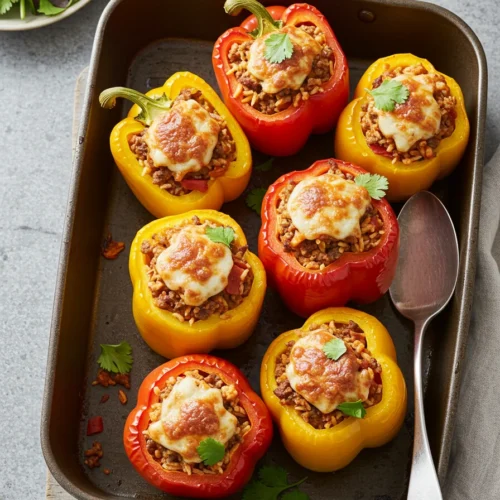
Stuffed Bell Peppers with Beef & Rice
Equipment
- 1 Baking dish (9×13 inch) For holding the peppers upright during baking.
- 1 Skillet For cooking the beef filling.
- 1 Knife For cutting the tops off the peppers and dicing vegetables.
- Optional Foil To cover the peppers during baking.
Ingredients
Main Ingredients
- 4–6 large Bell peppers (any color) Green for a mild bitterness or red/yellow/orange for sweetness.
- 1 lb Ground beef (80/20 blend) Leaner beef can be used but may require added olive oil for moisture.
- 1 cup Cooked long-grain white rice Brown rice works too but requires pre-cooking.
- 1 can Diced tomatoes (14.5 oz) Adds texture and acidity.
- 1 small Onion (finely diced) Yellow onion provides sweetness and depth.
- 2 cloves Garlic (minced) Fresh garlic enhances flavor.
- 1 cup Tomato sauce Creates a rich base for the filling.
- 1 tbsp Tomato paste Concentrates tomato flavor.
- 1 tsp Italian seasoning A blend of oregano, basil, and thyme.
- 1 tsp Smoked paprika Adds warmth and smokiness.
- 1 cup Shredded cheese Monterey Jack, mozzarella, or cheddar work well.
- To taste tsp Salt Adjust based on preference.
- To taste tsp Black pepper Freshly ground for better flavor.
Optional Additions
- 1 pinch Red pepper flakes for heat. Optional
- 2 tbsp Fresh parsley or cilantro for garnish. Optional
Instructions
Step-by-Step Recipe
Prepare the Bell Peppers:
- Preheat the oven to 375°F (190°C). Cut the tops off the bell peppers and remove seeds and membranes. Rinse and pat dry. Lightly brush the peppers with olive oil and season with salt and pepper. Place them upright in a baking dish.
Make the Beef and Rice Filling:
- In a skillet over medium heat, brown the ground beef until no pink remains. Drain excess fat if needed. Add diced onion and cook until softened. Stir in minced garlic and cook for 1 minute until fragrant.
- Add diced tomatoes, tomato sauce, tomato paste, Italian seasoning, smoked paprika, salt, and black pepper. Stir well to combine. Mix in the cooked rice and half of the shredded cheese. Remove from heat.
Assemble the Peppers:
- Spoon the beef and rice mixture into each pepper, pressing gently to fill them completely without overpacking. Pour a thin layer of tomato sauce around the peppers in the baking dish. Sprinkle the remaining cheese on top of each pepper.
Bake the Peppers:
- Cover the dish with foil and bake for 35–40 minutes. Remove the foil and bake for an additional 10–15 minutes until the peppers are tender and the cheese is golden. Let rest for 5 minutes before serving. Garnish with fresh parsley if desired.
Notes
-
- Storage: Store leftovers in an airtight container in the refrigerator for up to 3–4 days. Reheat in the oven at 350°F for 15–20 minutes for best texture.
- Freezing: Assemble peppers without cheese, freeze for up to 3 months, and reheat directly in the oven at 350°F for 40–45 minutes. Add cheese during the last few minutes of baking.
- Variations: Use ground turkey, chicken, or plant-based crumbles for a lighter option. Swap rice with quinoa or cauliflower rice for low-carb diets.
Frequently Asked Questions
-
What ingredients do you need to make stuffed bell peppers with beef and rice?
- Bell peppers, ground beef, cooked rice, diced tomatoes, onion, garlic, tomato sauce, Italian seasoning, smoked paprika, salt, black pepper, and shredded cheese.
-
How can I make vegetarian stuffed bell peppers?
- Replace beef with lentils, quinoa, or beans like black beans or chickpeas. Use vegetable broth instead of beef broth for seasoning.
-
Can I use brown rice instead of white rice?
- Yes, but brown rice takes longer to cook, so it should be fully prepared before mixing with the beef filling.
-
How long does it take to bake stuffed bell peppers?
- Bake covered for 35–40 minutes, then uncovered for 10–15 minutes until the peppers are tender and the filling is hot.
-
What are some good sides to serve with stuffed bell peppers?
- A green salad, roasted vegetables, steamed green beans, or garlic bread pair well with the dish.
- Can stuffed bell peppers be frozen for later use?
- Yes, assemble the peppers without cheese, freeze for up to 3 months, and reheat directly in the oven.
Tips & Tricks
- Flavor Enhancement: Add a splash of Worcestershire sauce or soy sauce to the filling for umami depth. Toast breadcrumbs and sprinkle them on top for extra crunch.
- Presentation: Use a mix of colored bell peppers for visual appeal. Garnish with fresh herbs like parsley or cilantro before serving.
- Leftovers: Transform leftover filling into a casserole by layering it with rice and baking it in a dish topped with cheese.
Plating and Garnishing
- Garnish: Sprinkle chopped parsley, grated Parmesan, or red pepper flakes on top for freshness and color.
- Serving Style: Arrange stuffed peppers on a platter with sides like a green salad or roasted veggies for balance. Serve with a dollop of sour cream or tzatziki for extra flavor.
- Sides: Pair with light options like cucumber salad or warm choices like garlic bread for a complete meal.