Classic Apple Pie with Cinnamon: The Ultimate Homemade Recipe
Classic apple pie with cinnamon is a timeless dessert known for its simple yet rich flavor. It combines tart apples with warm spices like cinnamon and nutmeg, all wrapped in a flaky, buttery crust.
This pie uses Granny Smith apples for their firm texture and bright tartness, which hold up well during baking. Cinnamon adds warmth and depth, making the filling cozy without overpowering the natural apple flavor.
The crust is made flaky by using cold butter and careful mixing techniques that keep the dough tender. With easy-to-follow steps, this recipe suits both beginners and experienced bakers.
It’s a dessert that fits any occasion, from holiday dinners to quiet weekend treats. The pie offers a comforting taste of home every time.
Essential Ingredients for Classic Apple Pie with Cinnamon
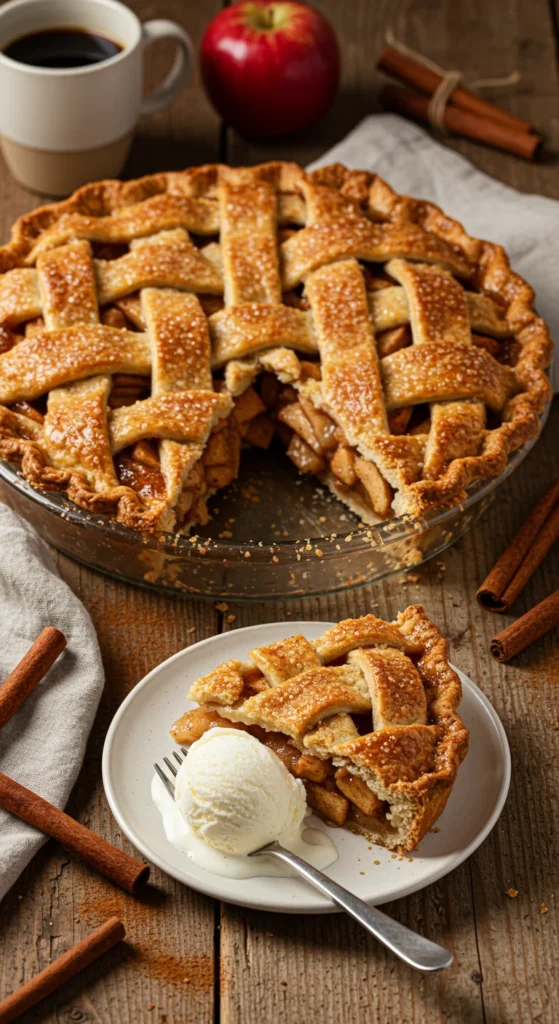
Making a classic apple pie with cinnamon depends on using the right combination of spices, sugars, apples, and butter. Each plays a specific role to create the perfect balance of flavor, texture, and aroma in the finished pie.
Key Spices: Cinnamon, Nutmeg, and Ginger
Cinnamon is the primary spice in a cinnamon apple pie recipe. Its warm, sweet, and slightly spicy flavor is essential for complementing the tartness of the apples.
Nutmeg adds a subtle earthiness and depth, enhancing the overall spice blend without overpowering. Ginger, used sparingly, brings a gentle heat and brightness.
It helps to lift the heavier spices and adds complexity. These three spices together create a balanced flavor that is traditional and inviting.
Using freshly ground nutmeg and ginger ensures a stronger, fresher taste compared to pre-ground options.
Sugars: Balancing White Sugar and Brown Sugar
Both white and brown sugar are important in achieving the right sweetness and moisture in the pie filling. White sugar adds clean sweetness and helps to highlight the apple’s natural flavors without being too rich.
Brown sugar contributes deeper caramel notes and a slight chewiness due to its molasses content. A typical combination might use equal parts or slightly more brown sugar to create a warm, rich taste.
This also pairs well with the cinnamon and nutmeg, making the filling complex yet not cloyingly sweet. Balancing these sugars is key to prevent the pie from tasting one-dimensional or too sugary.
Choosing Tart and Sweet Apples
The best apples for baking combine both tart and sweet flavors to create a complex filling. Tart apples like Granny Smith hold their shape well after baking and provide a refreshing tang that balances the richness of sugar and spices.
Sweet apples like Honeycrisp, Golden Delicious, or Fuji add natural sweetness and soften slightly, giving the pie a tender texture. Mixing around 60% tart apples with 40% sweet apples is a common ratio in apple pie recipes.
Butter and Its Role in Texture and Flavor
Butter is crucial in two parts of the apple pie: the crust and sometimes in the filling. In the crust, high-quality unsalted butter provides a flaky, tender texture and rich flavor.
Butter melts during baking, creating layers that crisp and brown beautifully. In the filling, small pats of butter melted over the spiced apples add richness and help carry the spices throughout the pie.
Using real butter rather than margarine or shortening is preferred to maintain a buttery aroma and taste essential to classic apple pie.
Perfecting the Pie Crust
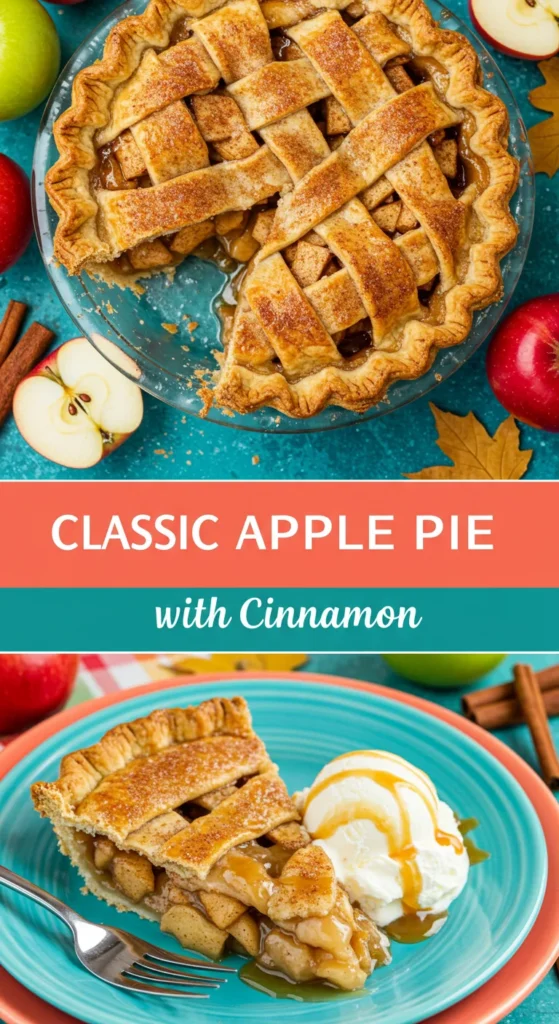
A great apple pie starts with the crust. The choice between homemade and refrigerated crust impacts flavor and texture.
Achieving the right flakiness comes down to cold ingredients and careful handling. Finishing with an egg wash gives the crust a shiny, golden look.
Homemade Pie Crust vs. Refrigerated Pie Crust
Homemade pie crust allows full control over ingredients and texture. It typically uses cold unsalted butter, flour, salt, sugar, and ice water.
The fresh butter provides a richer, more buttery flavor than most store-bought versions. Refrigerated pie crust saves time but often contains shortening or hydrogenated fats.
These make the crust less flavorful and can affect texture. Some brands may also add preservatives or additives.
For the best results, homemade crust is preferred when flavor and flakiness matter most. However, refrigerated crust is a practical option that can still yield decent results if properly handled.
How to Achieve a Flaky, Buttery Crust
Cold ingredients are key. Using very cold butter cut into cubes and ice water keeps the dough cool.
When baked, chunks of cold butter create steam, forming flaky layers. Avoid overworking the dough.
Mix just until the flour and butter combine to keep pieces of butter intact. Over-kneading develops gluten, making the crust tough.
Chill the dough for at least one hour before rolling. This firms the butter and relaxes the gluten, making the crust easier to roll and less likely to shrink during baking.
Rolling the dough between sheets of lightly floured parchment paper helps prevent sticking and tearing.
Egg Wash for a Golden Finish
An egg wash gives the pie a shiny, golden crust and a slight crispness. It is usually made by beating one egg with a tablespoon of milk or water.
Brush the egg wash evenly over the top crust or lattice before baking. This helps the crust brown evenly and adds a subtle sheen.
Avoid over-brushing, as thick layers can cause uneven browning or pooling. If desired, sprinkle coarse sugar on top for extra texture and sweetness.
Crafting the Cinnamon-Spiced Apple Pie Filling
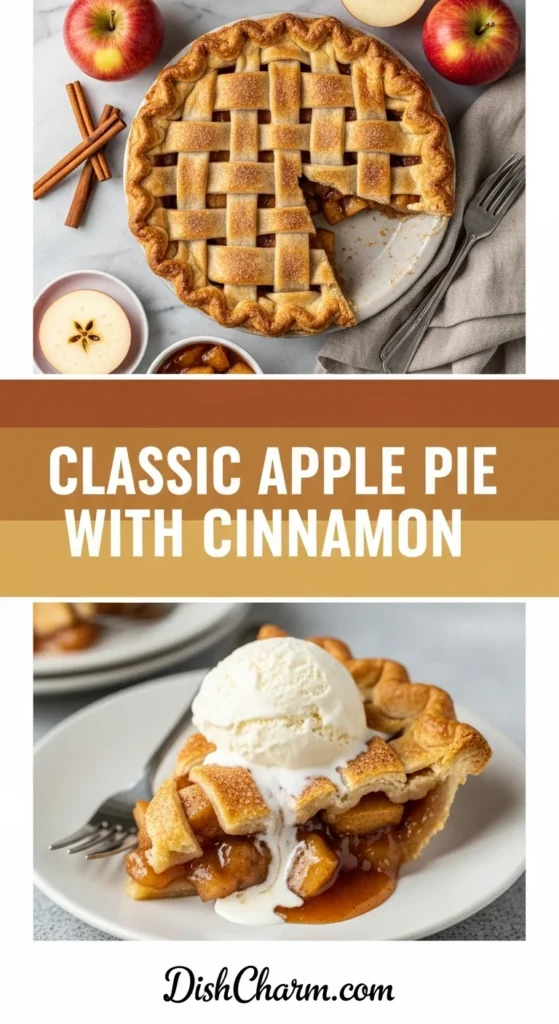
The filling in a cinnamon apple pie depends on selecting the right apples, balancing sweet and spice, and adding brightness to cut through the richness. Combining fresh ingredients like brown and white sugar, cinnamon, and lemon juice creates a flavorful and well-rounded filling.
Preparing the Best Apple Pie Filling
The filling starts with fresh apples, usually a mix of tart and sweet varieties. Granny Smith apples bring tartness, while Honeycrisp or Fuji add sweetness.
They should be peeled, cored, and sliced evenly for uniform cooking. Using both brown and white sugar helps create depth in sweetness.
Brown sugar adds a rich, molasses note, while white sugar provides straightforward sweetness. These sugars mix with cinnamon, which gives warm spice without overpowering the apples.
Letting the apple mixture rest for about 30 minutes before baking helps to pull out moisture. This step improves the texture and intensifies the flavors in the filling.
Balancing Sweetness and Spice
Sweetness and spice must work together to enhance the apple pie filling. Too much sugar can mask the apple flavor, while too much cinnamon can be bitter.
A common approach is to use 1 to 2 teaspoons of cinnamon for every 6 cups of sliced apples. This amount complements the natural sweetness without overwhelming it.
Brown sugar’s caramel notes blend well with cinnamon, making the filling taste warm and inviting. Adjust sugar levels by taste and apple variety to keep the filling balanced.
Using Lemon Juice for Brightness
Lemon juice brightens the filling’s flavor and prevents apples from turning brown. A small amount, usually about 1 to 2 tablespoons, is enough for a full batch of filling.
The acidity in lemon juice cuts through the sweetness and cinnamon spice, adding freshness to the pie. Adding lemon juice early, right after slicing the apples, protects the fruit from oxidizing and supports the pie’s overall flavor profile.
Baking, Serving, and Storing a Classic Apple Pie

Baking a perfect apple pie requires careful temperature control and timing to get a golden crust and tender filling. Serving it warm with the right accompaniments enhances the flavors.
Proper storage keeps the pie fresh for days or longer if frozen.
Apple Pie Baking Techniques
Start by preheating the oven to a high temperature, around 425°F, to help set the crust quickly. After 15 minutes, lower the heat to 375°F and continue baking for about 30 minutes.
This two-step process ensures a crispy crust and bubbling filling. Using an egg wash on the top crust before baking gives the pie a shiny, golden finish.
Cutting slits in the top allows steam to escape, preventing a soggy crust. If the pie edges brown too fast, cover them with foil.
Chilling the pie dough before baking helps keep it flaky. Using a mix of tart and sweet apples, like Granny Smith and Honeycrisp, balances flavor and texture.
Serving Suggestions for Baked Apple Pie
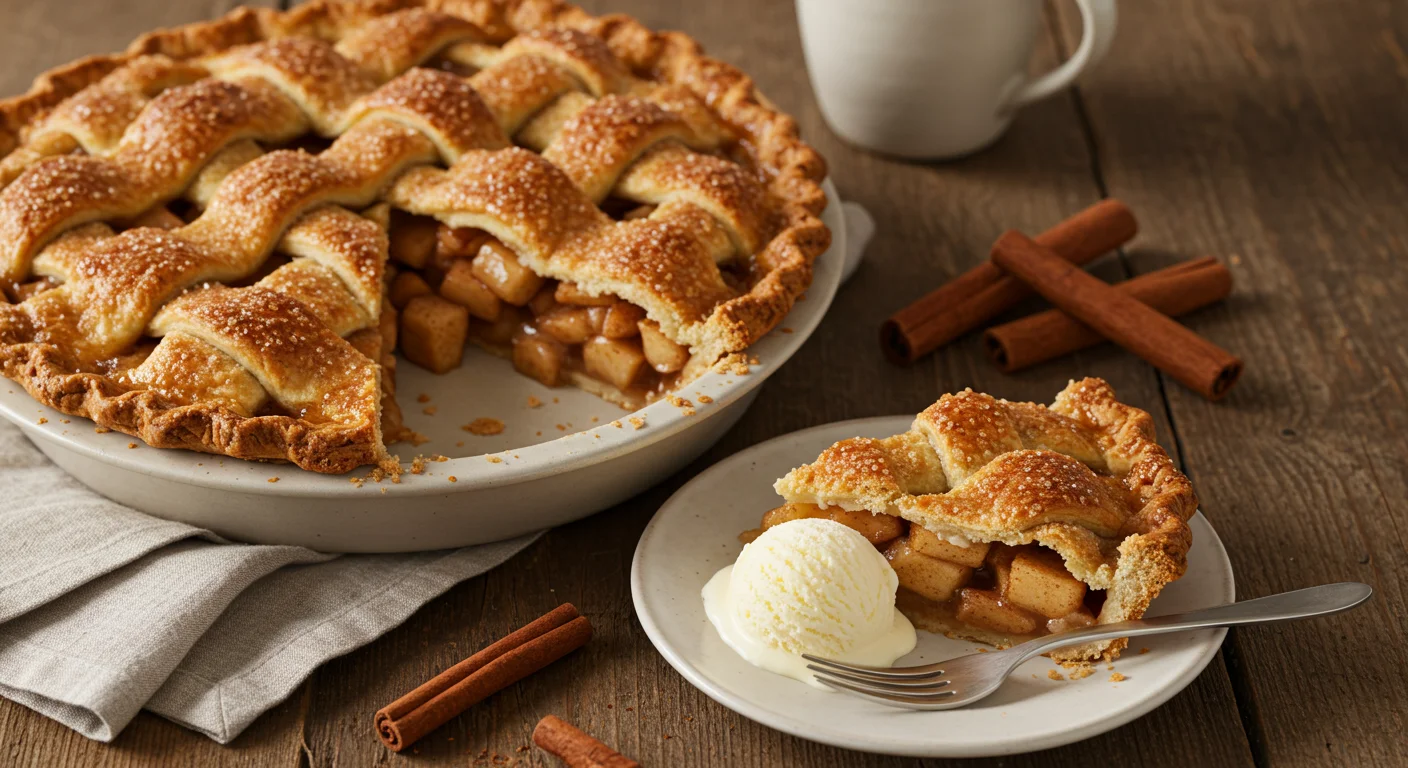
Serve the apple pie warm for the best taste. A scoop of vanilla ice cream or a dollop of whipped cream complements the cinnamon and apple filling well.
Cut the pie into eight even slices for sharing. It pairs nicely with hot beverages like coffee or tea during cooler months.
For an extra touch, dust the top with a small sprinkle of cinnamon or nutmeg before serving. This adds aroma without overpowering the natural sweetness of the apples.
Tips for Storing and Freezing
Store leftover apple pie covered in the fridge for up to three days. Keep it tightly wrapped to prevent it from drying out or absorbing other odors.
To reheat, warm pie slices in a 350°F oven for 10-15 minutes. This refreshes the crust’s crispness and warms the filling evenly.
For longer storage, freeze the pie wrapped in plastic wrap and then foil. To thaw, place the pie in the refrigerator overnight, then reheat in the oven.
Freezing works best with homemade apple pies that use double crusts to protect the filling.
Frequently Asked Questions
What are the essential ingredients for a traditional apple pie?
The basics include firm apples like Granny Smith, sugar, cinnamon, and all-purpose flour for thickening. Butter and salt add flavor, while lemon juice helps prevent browning and adds brightness.
Cold unsalted butter is key for the crust.
How can I incorporate cinnamon into my apple pie for the best flavor?
Cinnamon should be mixed evenly with the sugar and spices that coat the sliced apples. Using about one teaspoon of ground cinnamon enhances the apples without overpowering.
Adjust the amount carefully to maintain balance.
What is the secret to making a flaky and tender pie crust?
Cold butter cut into flour creates small fat pockets that bake into flaky layers. Handling the dough gently and chilling it before rolling prevents toughness.
Using ice water, or substituting part with cold vodka, helps keep the dough tender.
Can you provide step-by-step guidance on preparing classic apple pie?
Start by making the dough with flour, salt, sugar, and cold butter, then chill it. Prepare the filling by peeling and slicing apples, mixing them with sugar, cinnamon, and cornstarch.
Pre-cook the filling briefly to reduce moisture. Roll out dough, fill the crust, add top crust, and bake.
What are some variations of the classic apple pie recipe?
Variations include using a lattice crust instead of full top crust or adding spices like nutmeg and allspice. Some add a splash of vanilla or caramel drizzle.
Mixing different apple types enhances flavor and texture.
How do I ensure that my apple pie filling is not too runny?
Pre-cooking the apple filling on the stovetop reduces excess water. Adding cornstarch as a thickener helps the juices set during baking.
Letting the pie cool completely before slicing allows the filling to firm up properly.
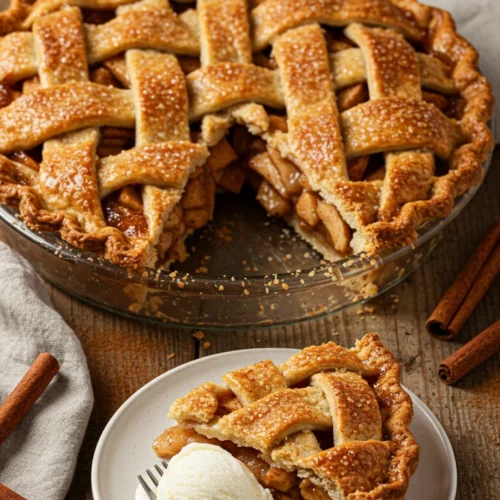
Classic Apple Pie with Cinnamon
Equipment
- 1 9-inch pie dish Deep enough to hold filling without overflowing.
- 1 Rolling Pin For rolling out dough evenly.
- 1 Mixing Bowls For preparing crust and filling.
- 1 Pastry brush For applying egg wash.
- 1 Sharp knife or peeler For peeling and slicing apples.
- 1 Measuring Cups and Spoons For precise ingredient measurements.
Ingredients
Crust Ingredients
- 2 ½ cups All-purpose flour Sifted for even texture.
- 1 tsp Salt Enhances flavor.
- 1 tbsp Granulated sugar Adds slight sweetness to the crust.
- 1 cup Unsalted butter (cold) Cut into small cubes for flakiness.
- 6-8 tbsp Ice water Added gradually to bind the dough.
Filling Ingredients
- 6–7 medium Apples A mix of Granny Smith (tart) and Honeycrisp/Fuji (sweet).
- ¾ cup Granulated sugar Balances tartness; adjust based on apple sweetness.
- ¾ cup Brown sugar Adds caramel notes and depth.
- 2–3 tbsp All-purpose flour Helps thicken the filling.
- 1 ½ tsp Ground cinnamon Provides warm spice; adjust to taste.
- ¼ tsp Ground nutmeg Adds earthy depth.
- 1–2 tbsp Fresh lemon juice Prevents browning and adds brightness.
- 2 tbsp Unsalted butter (cold) Dotted over filling for richness.
- ⅛ tsp Ground ginger for brightness. (Optional)
Egg Wash
- 1 large Egg Beaten with 1 tbsp milk or water for golden crust.
Instructions
Step-by-Step Recipe
Prepare the Crust:
- In a mixing bowl, combine flour, salt, and sugar. Add cold butter cubes and use a pastry cutter or your fingers to blend until the mixture resembles coarse crumbs.
- Gradually add ice water, one tablespoon at a time, mixing gently until the dough comes together. Divide into two equal portions, shape into discs, wrap in plastic wrap, and chill for at least 1 hour.
Prepare the Filling:
- Peel, core, and slice apples evenly. In a large bowl, toss them with granulated sugar, brown sugar, flour, cinnamon, nutmeg, and lemon juice. Let the mixture rest for 30 minutes to release juices.
Assemble the Pie:
- Roll out one disc of dough on a lightly floured surface to fit the bottom of the pie dish. Transfer it to the dish and trim the edges.
- Pour the apple filling into the crust, spreading it evenly. Dot the top with small pieces of cold butter.
- Roll out the second disc of dough and place it over the filling. Trim, crimp the edges, and cut slits in the top to allow steam to escape.
Apply Egg Wash:
- Brush the top crust with the egg wash. Sprinkle with coarse sugar if desired for extra crunch and sweetness.
Bake the Pie:
- Preheat the oven to 425°F (220°C). Place the pie on a baking sheet to catch drips. Bake for 15 minutes, then reduce the temperature to 375°F (190°C) and continue baking for 30–35 minutes, or until the crust is golden brown and the filling is bubbling. Cover edges with foil if they brown too quickly.
Cool and Serve:
- Let the pie cool completely on a wire rack for at least 2 hours before slicing. This allows the filling to set properly. Serve warm with vanilla ice cream or whipped cream.
Notes
-
- Storage: Store leftovers covered at room temperature for up to 2 days or refrigerated for up to 5 days. Reheat slices in a 350°F (175°C) oven for 10–15 minutes.
- Freezing: Wrap the cooled pie tightly in plastic wrap and foil. Freeze for up to 3 months. Thaw in the refrigerator overnight and reheat in the oven before serving.
- Variations: Add spices like allspice or cardamom, or drizzle caramel sauce over the finished pie for extra indulgence.
Frequently Asked Questions
-
What are the essential ingredients for a traditional apple pie?
- Firm apples (like Granny Smith), sugar, cinnamon, flour, cold unsalted butter, and lemon juice.
-
How can I incorporate cinnamon into my apple pie for the best flavor?
- Mix cinnamon evenly with the sugar and spices coating the apples. Use about 1–2 teaspoons for balance.
-
What is the secret to making a flaky and tender pie crust?
- Use cold butter, handle the dough gently, and chill it before rolling. Adding ice water or cold vodka helps keep the dough tender.
-
Can you provide step-by-step guidance on preparing classic apple pie?
- Make the crust, prepare the filling by mixing apples with sugar, spices, and lemon juice, assemble the pie, apply egg wash, and bake at high heat initially, reducing for the remainder.
-
What are some variations of the classic apple pie recipe?
- Use a lattice crust, add spices like nutmeg or allspice, or drizzle caramel sauce. Mixed apple varieties enhance flavor and texture.
-
How do I ensure that my apple pie filling is not too runny?
- Pre-cook the filling to reduce moisture, add cornstarch or flour as a thickener, and let the pie cool completely before slicing.
Tips & Tricks
- Flavor Enhancement: Add a splash of vanilla extract or a pinch of ground cloves for extra complexity.
- Presentation: Dust the cooled pie with powdered sugar or sprinkle coarse sugar before baking for added visual appeal.
- Leftovers: Reheat slices briefly in the oven to restore the crust’s crispness and warm the filling.
Plating and Garnishing
- Garnish: Serve with a scoop of vanilla ice cream, whipped cream, or a drizzle of caramel sauce.
- Serving Style: Cut into neat slices and arrange on plates with garnishes like cinnamon sticks or apple slices for decoration.
- Sides: Pair with hot coffee, tea, or mulled cider for a cozy experience.