Chinese BBQ Pork – Char Siu
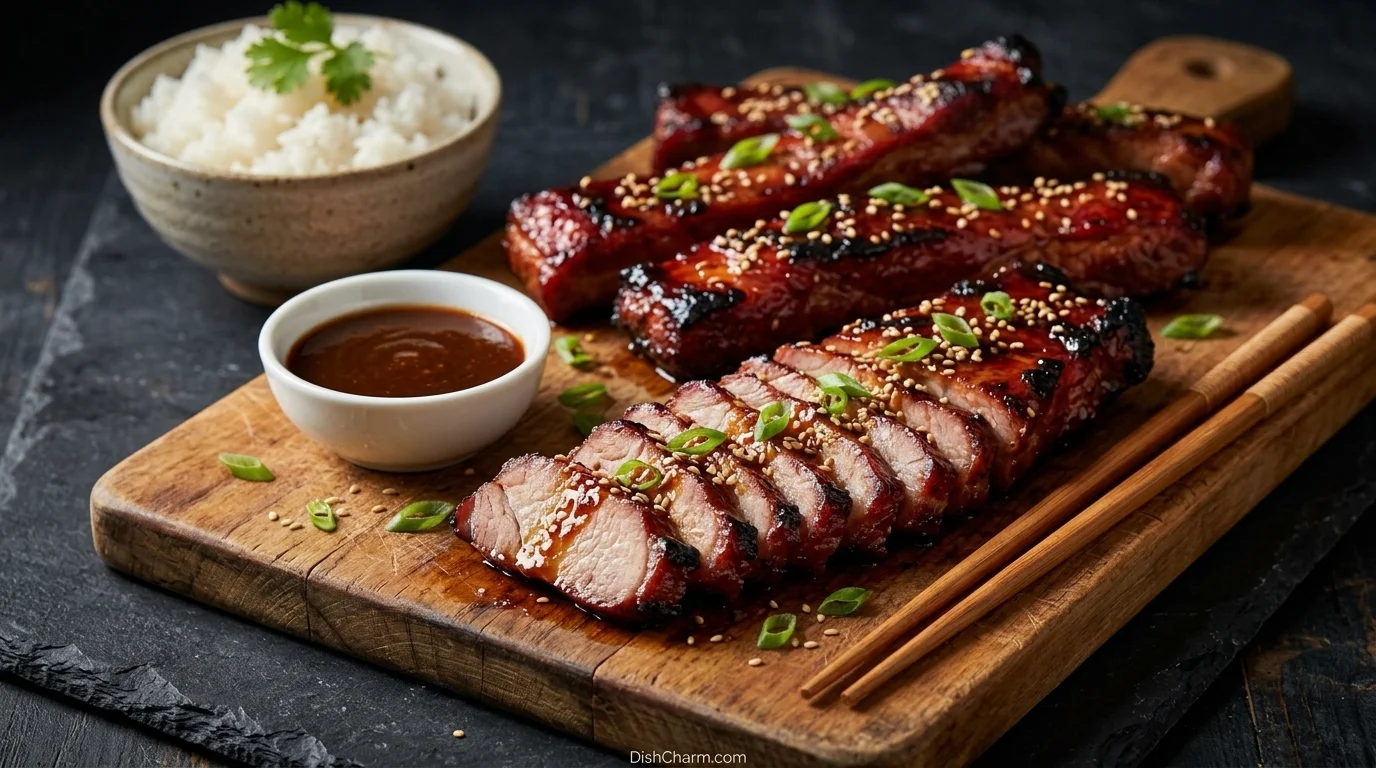
If you’ve ever walked past a Chinese BBQ shop and seen those strips of lacquered, ruby-red pork hanging in the window — you already know exactly what this recipe tastes like. That sweet, sticky, smoky, deeply savory pork that seems like it could only come from a professional roasting setup? You can make it at home, in your regular oven, and it comes out genuinely incredible.
Char Siu (叉燒) is one of the most iconic dishes in Cantonese cuisine. The name literally translates to “fork roasted” — a nod to the traditional method of threading long strips of marinated pork onto large forks and roasting them over an open fire or in a specialized hanging oven. Restaurants in Chinatown still do it that way, and the results are spectacular. But the good news is that a standard home oven, a wire rack, and the right marinade get you remarkably close to that same result.
The secret is entirely in the marinade and the patience to let it work overnight. Hoisin sauce, soy sauce, honey, five-spice powder, garlic, and a touch of sesame oil come together into something that is so much more than the sum of its parts. The pork soaks it all up overnight, and when it hits a hot oven, it caramelizes into that gorgeous, glossy, sticky crust that makes Char Siu so completely addictive.
Make a batch on the weekend and you’ll have the most versatile protein in your fridge all week long.
What Is Char Siu?
Char Siu is a style of Cantonese barbecued pork that has been a staple of Chinese cuisine for centuries. It originated in the Guangdong province of southern China and spread through Chinese communities all over the world — you’ll find it hanging in BBQ shop windows in New York, San Francisco, London, Sydney, and everywhere in between.
What sets Char Siu apart from other BBQ styles is its marinade — a blend of sweet, savory, and aromatic flavors built around five-spice powder, hoisin, soy, and honey. Traditional versions also use fermented red bean curd, which gives the pork its distinctive deep red color without any food dye. The pork is marinated for hours, roasted at high heat, and basted with honey during cooking to build that signature lacquered glaze.
In Chinese restaurants and BBQ shops, it’s served sliced over rice with a drizzle of the cooking juices, tucked into steamed bao buns, folded into fried rice, or layered into noodle soups. It is one of the most versatile proteins in Chinese cooking — once you have a batch in the fridge, you can use it in a dozen different ways throughout the week.
Why You’ll Love This Recipe
The marinade is made from ingredients that are easy to find at any well-stocked grocery store or Asian market, and most of them you only need in small amounts. Five-spice powder does a lot of heavy lifting — it brings warmth, depth, and that unmistakably Chinese BBQ character to the pork without requiring a long list of individual spices. Hoisin sauce adds sweet, savory complexity and body to the marinade. Honey creates the sticky glaze. Soy sauce brings saltiness and umami. Together, they create a marinade that tastes genuinely authentic and deeply flavorful.
This recipe is also incredibly versatile once it’s made. Slice it over steamed rice for the simplest possible dinner. Dice it into fried rice. Stuff it into steamed bao buns. Add it to ramen. Toss it through lo mein noodles. The pork keeps well in the fridge for 4 days and freezes beautifully for up to 3 months, which means making a big batch is always worth it.
And the broil at the end — two to three minutes under high heat — gives you those slightly charred, caramelized edges that make every bite of restaurant Char Siu so satisfying. Don’t skip it.

Choosing the Right Cut of Pork
The cut of meat makes a real difference in the final result, and it’s worth talking about before you go shopping.
Pork shoulder or pork butt is the most popular choice for Char Siu and for good reason. It has just enough fat marbling to stay moist during the long roasting time without being overly fatty. The fat renders during cooking and bastes the meat from the inside, keeping it juicy all the way through. This is what most Chinese BBQ shops use.
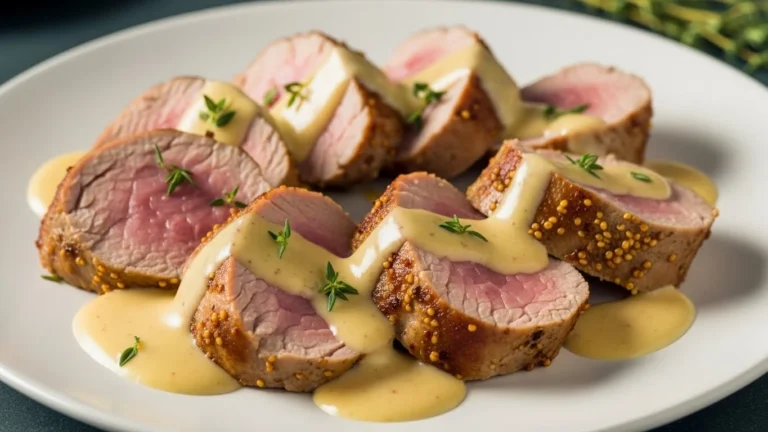
Pork tenderloin is the leanest option and gives you the most tender, delicate texture. It’s a good choice if you want something lighter, but it can dry out faster than shoulder, so it needs careful attention during cooking. Pull it a few minutes earlier than the shoulder.
Pork belly gives you the richest, most indulgent result — fatty, silky, and extremely juicy. It’s excellent in steamed bao buns where that fatty richness contrasts with the plain, soft bun.
For this recipe, pork shoulder is the recommended cut. It’s the most forgiving, produces the juiciest result, and is typically the most affordable of the three options.
The Marinade — What Each Ingredient Does
Hoisin sauce is the backbone of the marinade. It’s thick, sweet, savory, and slightly fermented — it adds body, color, and that distinct Chinese BBQ flavor that nothing else quite replicates.
Soy sauce brings saltiness and umami depth. It also helps the marinade penetrate the meat more deeply.
Honey creates the sticky, caramelized glaze on the outside of the pork during roasting. Some traditional recipes use maltose instead — a thick, less sweet syrup that gives an even more lacquered finish — but honey works beautifully and is much easier to find.
Five-spice powder is the aromatic soul of Char Siu. It’s a blend of star anise, cloves, cinnamon, Sichuan pepper, and fennel seeds — warm, complex, and immediately recognizable. A little goes a long way.
Sesame oil adds a nutty background note and helps the marinade cling to the surface of the meat.
Shaoxing rice wine adds depth and a subtle fermented sweetness. If you can’t find it, dry sherry is a reasonable substitute. If you prefer to leave it out, just add a splash more soy sauce.
Garlic adds pungency and savory depth. Fresh minced garlic works best here.
Red food coloring is optional. Traditional Char Siu gets its deep red color from fermented red bean curd. If you want that classic look without the bean curd, a few drops of red food coloring in the marinade will do it. If you skip it, the pork will have a beautiful golden-brown color that tastes exactly the same — just looks a little different.
Full Ingredients List
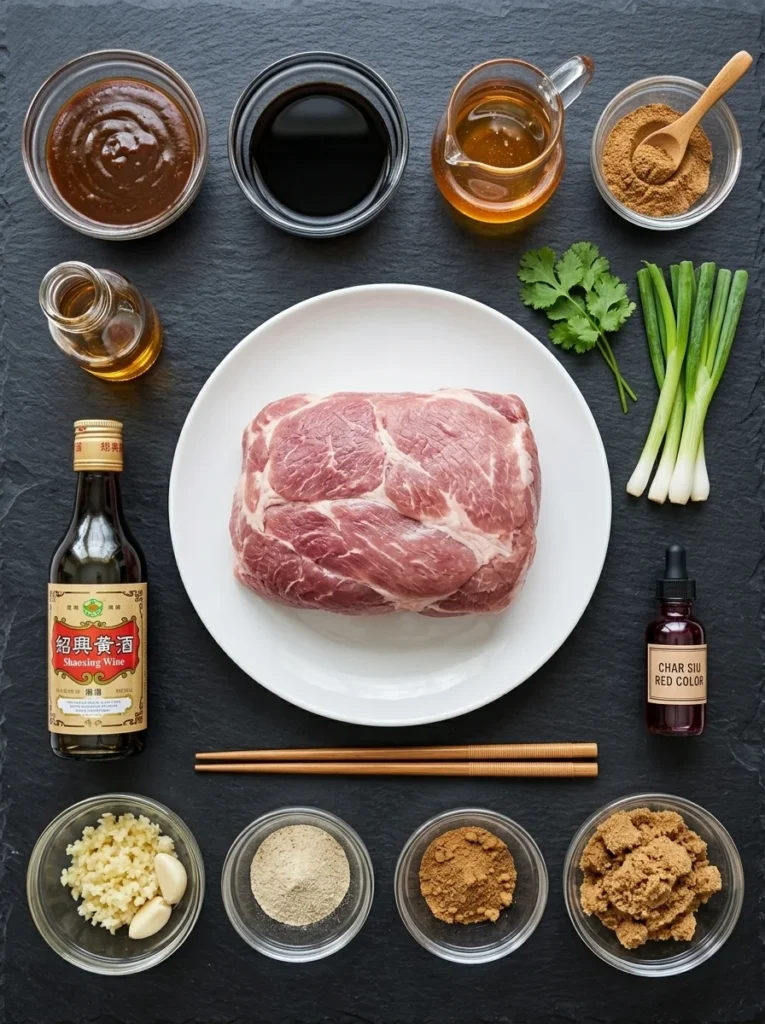
2 lbs pork shoulder, cut into strips about 2 to 3 inches thick and 6 to 8 inches long
3 tablespoons hoisin sauce
2 tablespoons soy sauce
2 tablespoons honey, divided (1 tablespoon for marinade, 1 tablespoon for glazing)
1 tablespoon Shaoxing rice wine (or dry sherry)
1 tablespoon brown sugar
1 teaspoon sesame oil
1 teaspoon five-spice powder
3 cloves garlic, minced
½ teaspoon white pepper
2 to 3 drops red food coloring (optional)
Step-by-Step Instructions
Step 1 — Prep the pork.
Cut the pork shoulder into long strips approximately 2 to 3 inches thick and 6 to 8 inches long. Don’t trim any visible fat from the strips — that fat will render during roasting and keep the meat moist and flavorful. If you trim it all off, the pork can dry out.
Step 2 — Make the marinade.
In a medium bowl, whisk together the hoisin sauce, soy sauce, 1 tablespoon of honey, Shaoxing wine, brown sugar, sesame oil, five-spice powder, minced garlic, white pepper, and red food coloring if using. Stir until the sugar is fully dissolved and everything is well combined.
Step 3 — Marinate overnight.
Place the pork strips in a zip-lock bag or shallow baking dish and pour the marinade over. Make sure every surface of every piece is well coated — get in there with your hands if needed. Seal or cover and refrigerate overnight, or for at least 8 hours. The longer it marinates, the more deeply the flavors penetrate the meat. Before you go to bed, flip the bag or turn the pieces over so the marinade is contacting all sides evenly.
Step 4 — Bring to room temperature and prep the oven.
About 30 minutes before you’re ready to cook, take the pork out of the fridge and let it come to room temperature. This helps it cook more evenly. Preheat your oven to 425°F. Line a rimmed baking sheet with foil (the glaze will drip and burn onto an unlined pan), place a wire rack on top, and give the rack a light spray of cooking spray.
Step 5 — Roast the first round.
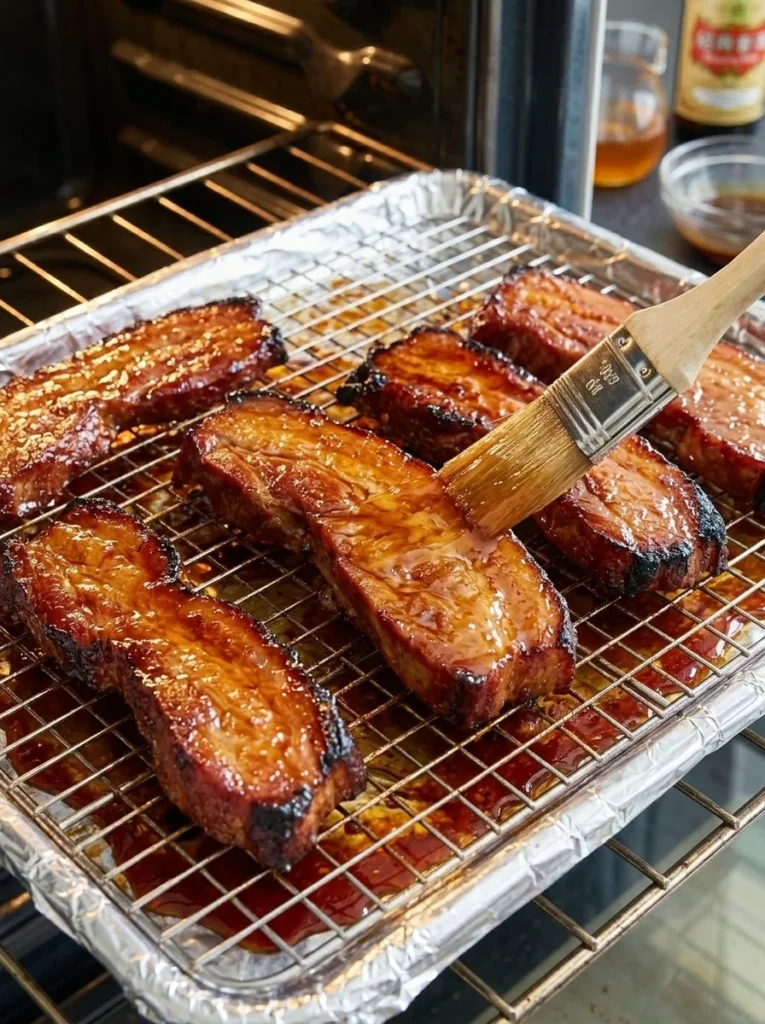
Lift the pork strips out of the marinade, letting any excess drip back into the bag. Reserve all remaining marinade. Lay the pork strips on the wire rack, spaced apart so they’re not touching. Roast at 425°F for 25 minutes, then carefully flip each strip and brush with the reserved marinade. Return to the oven and roast for another 15 to 20 minutes.
Step 6 — Glaze with honey and broil.
When the pork has roasted for a total of 40 to 45 minutes and looks deeply golden and caramelized, brush the remaining 1 tablespoon of honey over each strip. Switch the oven to broil on high and broil for 2 to 3 minutes per side, watching carefully the entire time. The honey and sugar in the marinade will go from perfectly caramelized to burned in under a minute if you walk away. You’re looking for slightly darkened, charred edges — that char is flavor, not a mistake.
Step 7 — Rest and slice.
The internal temperature should read at least 145°F. Transfer the pork to a cutting board and rest for 10 minutes. Then slice across the grain into pieces about ¼ to ½ inch thick. Arrange on a serving plate and spoon any drippings from the baking sheet over the top.
Tips for the Best Results
Marinate overnight without exception. A 30-minute marinade will give you very little of the Char Siu flavor that makes this dish what it is. Eight hours is the minimum — twelve hours is better. The flavors need time to penetrate through those thick strips of pork.
Use a wire rack on top of your foil-lined pan. Elevating the pork means hot air circulates around all sides during roasting, and you don’t end up with a soft, steamed bottom on each strip.
Don’t trim the fat. The fat on pork shoulder is what keeps this recipe moist during a 40-plus minute roast. It renders away and bastes the meat from the inside. Trim it after cooking if you prefer, but leave it on during roasting.
Watch the broiler like a hawk. The honey glaze at the end can go from perfect to burnt in sixty seconds under a broiler. Stay in front of the oven and check every 30 seconds.
Slice across the grain. This shortens the muscle fibers in the meat and makes every slice significantly more tender. Look at the direction of the lines running through the pork and cut perpendicular to them.
Save every drop of the drippings. The liquid that pools on the foil under the rack during roasting is concentrated, deeply flavored Char Siu glaze. Spoon it over the sliced pork when serving, or stir it into the rice.
Ways to Serve Char Siu
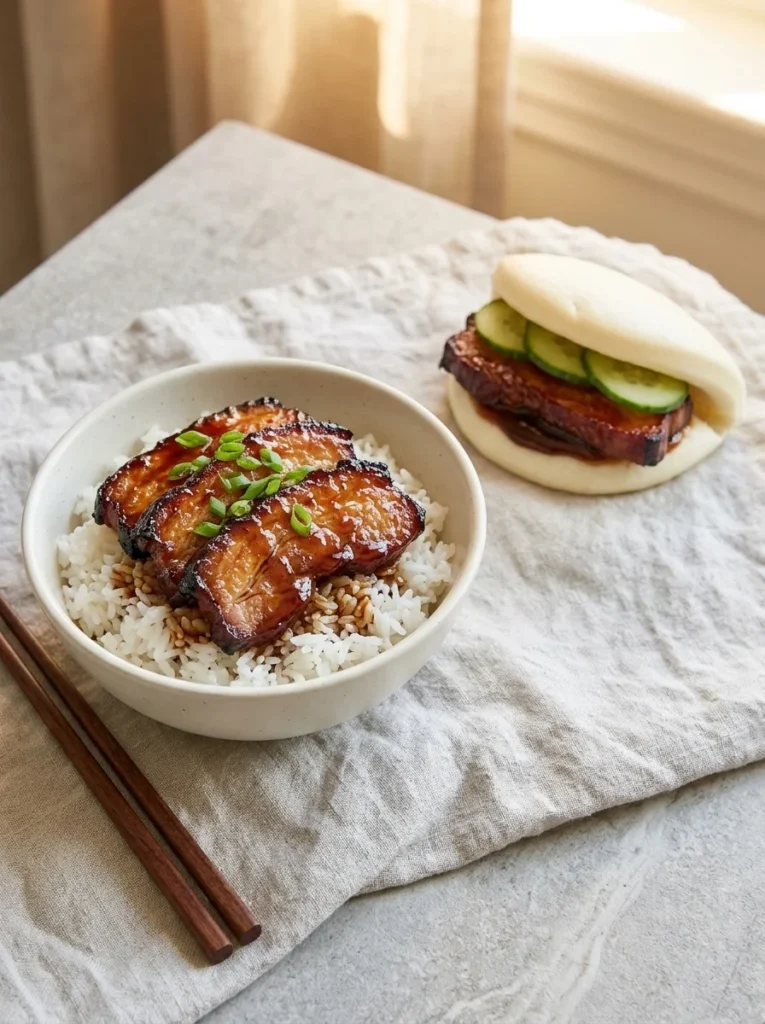
Over steamed white rice with a drizzle of the cooking juices and some sliced cucumbers on the side — this is the classic. Simple, perfect, no further work needed.
In steamed bao buns with hoisin sauce, quick-pickled cucumber, and a little fresh cilantro. This is the version that will make anyone who tries it immediately ask for the recipe.
In fried rice — dice the leftover Char Siu into small pieces and fry with day-old rice, eggs, green onions, and a splash of soy sauce and sesame oil. One of the best fried rice combinations that exists.
In noodle soups — add a few slices to homemade or store-bought ramen broth with noodles, a soft-boiled egg, and bok choy. Restaurant-quality ramen in under 20 minutes.
In lo mein or chow mein — toss sliced Char Siu through stir-fried noodles with vegetables and oyster sauce.
As an appetizer platter — arrange thin slices on a plate with a small bowl of hoisin sauce and some pickled daikon for dipping.
Make-Ahead and Storage Tips
Char Siu is one of the best recipes for batch cooking because the effort is front-loaded — the active prep time is minimal, and most of the work is just waiting. Make a double batch and you’ll thank yourself all week.
Cooked Char Siu keeps in an airtight container in the refrigerator for up to 4 days. Reheat gently in a skillet with a tiny splash of water, or in the microwave covered with a damp paper towel to retain moisture. A few minutes in the oven at 325°F covered with foil also works well.
For freezing, let the pork cool completely, then wrap individual portions tightly in plastic wrap and place in a freezer bag. It freezes well for up to 3 months. Thaw overnight in the fridge and reheat as above. The flavor holds up remarkably well from frozen.
Frequently Asked Questions
What does Char Siu taste like?
Char Siu has a flavor that’s hard to describe but immediately recognizable once you’ve had it — sweet, savory, slightly smoky, with a warm aromatic depth from the five-spice powder. The exterior has a sticky, caramelized, almost lacquered crust, and the inside is tender and juicy. It’s unlike any other BBQ style.
Can I make Char Siu without Shaoxing wine?
Yes. Dry sherry is the most common substitute and works very well. If you prefer to leave out alcohol entirely, just add an extra splash of soy sauce or a small splash of apple juice for a little sweetness and acidity.
Can I cook Char Siu on the grill instead of the oven?
Absolutely. Preheat the grill to medium-high heat. Grill the pork strips for about 5 to 7 minutes per side, basting with reserved marinade each time you flip. The grill adds an extra layer of smoky flavor that is genuinely excellent. Finish with the honey glaze in the last couple minutes of cooking.
What is five-spice powder and where do I find it?
Five-spice powder is a Chinese spice blend made from star anise, cloves, cinnamon, Sichuan pepper, and fennel seeds. You can find it in the spice aisle of most grocery stores, or in any Asian market. It keeps for a long time in a sealed jar.
Do I need red food coloring?
No. The red color in traditional Char Siu comes from fermented red bean curd, which is harder to find in regular grocery stores. Red food coloring is a common shortcut that gives the same visual result. If you skip it entirely, the pork will be a deep golden-brown — still beautiful and tasting exactly the same.
Why are my pork strips dry?
The most common reasons are that the pork was cut too thin, marinated too briefly, or cooked past 145°F internal temperature. Make sure your strips are at least 2 inches thick, marinate overnight, and use a thermometer to pull them right at 145°F.
Can I use a slow cooker?
Yes, for a hands-off version. Place the marinated pork in the slow cooker and cook on low for 6 to 8 hours or high for 3 to 4 hours. The texture will be softer and more fall-apart than oven-roasted, and you won’t get the caramelized crust. To compensate, transfer the cooked pork to a foil-lined baking sheet after slow cooking and broil for 3 to 5 minutes per side until the exterior caramelizes.
Chinese BBQ Pork – Char Siu
Ingredients
- 2 lbs pork shoulder cut into strips 2 to 3 inches thick and 6 to 8 inches long
- 3 tablespoons hoisin sauce
- 2 tablespoons soy sauce
- 2 tablespoons honey divided
- 1 tablespoon Shaoxing rice wine or dry sherry
- 1 tablespoon brown sugar
- 1 teaspoon sesame oil
- 1 teaspoon five-spice powder
- 3 cloves garlic minced
- ½ teaspoon white pepper
- 2 to 3 drops red food coloring optional
Instructions
- Cut pork shoulder into strips about 2 to 3 inches thick and 6 to 8 inches long. Leave any fat on — do not trim.
- Whisk together hoisin sauce, soy sauce, 1 tablespoon honey, Shaoxing wine, brown sugar, sesame oil, five-spice powder, garlic, white pepper, and red food coloring if using until sugar dissolves.
- Add pork strips to a zip-lock bag or shallow dish. Pour marinade over, coat well, and refrigerate for at least 8 hours or overnight. Flip once partway through.
- Remove pork from fridge 30 minutes before cooking. Preheat oven to 425°F. Line a baking sheet with foil and set a wire rack on top. Spray rack lightly with cooking spray.
- Place pork strips on the rack spaced apart. Roast 25 minutes, flip, brush with reserved marinade, and roast another 15 to 20 minutes until deeply golden.
- Brush with remaining 1 tablespoon honey. Broil on high for 2 to 3 minutes per side until edges are slightly charred and caramelized. Watch closely.
- Rest 10 minutes. Slice across the grain into ¼ to ½ inch pieces. Spoon pan drippings over the top before serving.
Notes